


Best Advocate In Dwarka

INDIA NEW RENT RULES 2026

First, important clarification:
There is no completely new “Rent Law 2026” passed nationwide.
Most “new rules” circulating are based on the Model Tenancy Act, 2019, which states are gradually implementing.

Key Rent Rules (Applicable in 2026 Practice)

1. Written & Registered Agreement

  • Rent agreement must be in writing
  • Should be registered within ~60 days
  • Verbal agreements are risky / weak legally

2. Security Deposit Limit

  • Residential: Max 2 months rent
  • Commercial: Max 6 months rent

Big relief for tenants (earlier 6–10 months was common)


3. Rent Increase Rule

  • Rent can be increased:
    • Only once in a year
    • With minimum 90 days written notice

4. Landlord Entry Rule

  • Landlord must give 24-hour notice before entering house
  • Exception: emergency situation

5. Repairs & Maintenance

  • Tenant informs landlord about repairs
  • Landlord must fix within 30 days
  • If not → Tenant can repair & deduct cost from rent

6. Protection from Harassment

Landlord cannot:

  • Force eviction without legal process
  • Cut electricity/water
  • Change locks or threaten tenant

7. Eviction Rules

  • Eviction only through legal procedure
  • Notice required (depends on agreement/state law)

Example: Month-to-month tenancy → ~15 days notice possible


8. Agreement Registration Importance

  • Registered agreement = strong legal proof
  • Unregistered = weak in court, but still partially valid

Reality Check (Very Important)

  • Rental laws in India are state-specific
  • 2026 rules = implementation + enforcement, not totally new law
  • Some states follow these rules fully, others partially

Simple Summary

Rule2026 Practice
AgreementWritten & registered
DepositMax 2 months (residential)
Rent IncreaseOnce/year + 90 days notice
Entry24 hours notice
RepairsLandlord must fix in 30 days
EvictionOnly legal process

Practical Advice (For You)

  • Always make registered rent agreement
  • Add clauses for:
    • Rent increase %
    • Notice period
    • Maintenance responsibility
  • Keep payment proof (bank transfer)

if a tenant stops paying rent and also refuses to execute a rent agreement, the owner has strong legal remedies under Indian law. Here’s a clear, practical guide


1. Send Legal Notice (First Step)

  • Send a legal notice demanding:
    • Payment of pending rent
    • Execution of rent agreement (if applicable)
    • Vacating the property (if default continues)

Notice period usually 15–30 days (depending on tenancy type)


2. File Eviction + Recovery Case

You can file a civil suit for:

  • Eviction (possession of property)
  • Recovery of arrears of rent
  • Mesne profits (compensation for illegal occupation)

If tenancy is oral → still valid, you can prove by:

  • Bank transfers / UPI
  • Witness
  • Previous communications

3. Ground of Default (Strongest Ground)

Non-payment of rent = valid ground for eviction

Courts generally favor landlord if:

  • Tenant is in continuous default
  • No valid justification

4. Relevant Legal Provisions

Under Transfer of Property Act, 1882

  • Section 106 → Notice to terminate tenancy
  • Section 111 → Lease termination

Under Model Tenancy Act, 2019 (where applicable)

  • Written agreement mandatory
  • Fast-track eviction through Rent Authority

Under Civil Procedure Code, 1908

  • File civil suit for possession + recovery

5. What Owner MUST NOT Do

❌ Do NOT:

  • Forcefully evict tenant
  • Change locks
  • Cut electricity/water

This can go against you legally


6. Practical Strategy (Very Important)

Step-by-step:

  1. Send legal notice
  2. Stop accepting partial informal payments (keep record)
  3. File Eviction + Arrears Suit
  4. Ask for interim rent/occupation charges during case

7. Fast Remedy Option

  • File summary suit (if written proof exists)
  • In some states → Rent Authority = faster than civil court

8. Extra Protection Tip

  • Always take:
    • Advance deposit
    • Police verification
    • Registered agreement

Simple Summary

If tenant:

  • ❌ Not paying rent
  • ❌ Refusing agreement

✔️ Owner can:

  • Send notice
  • Terminate tenancy
  • File eviction + recovery case

For Educational & Legal Awareness
Website: www.ushavatsassociates.in
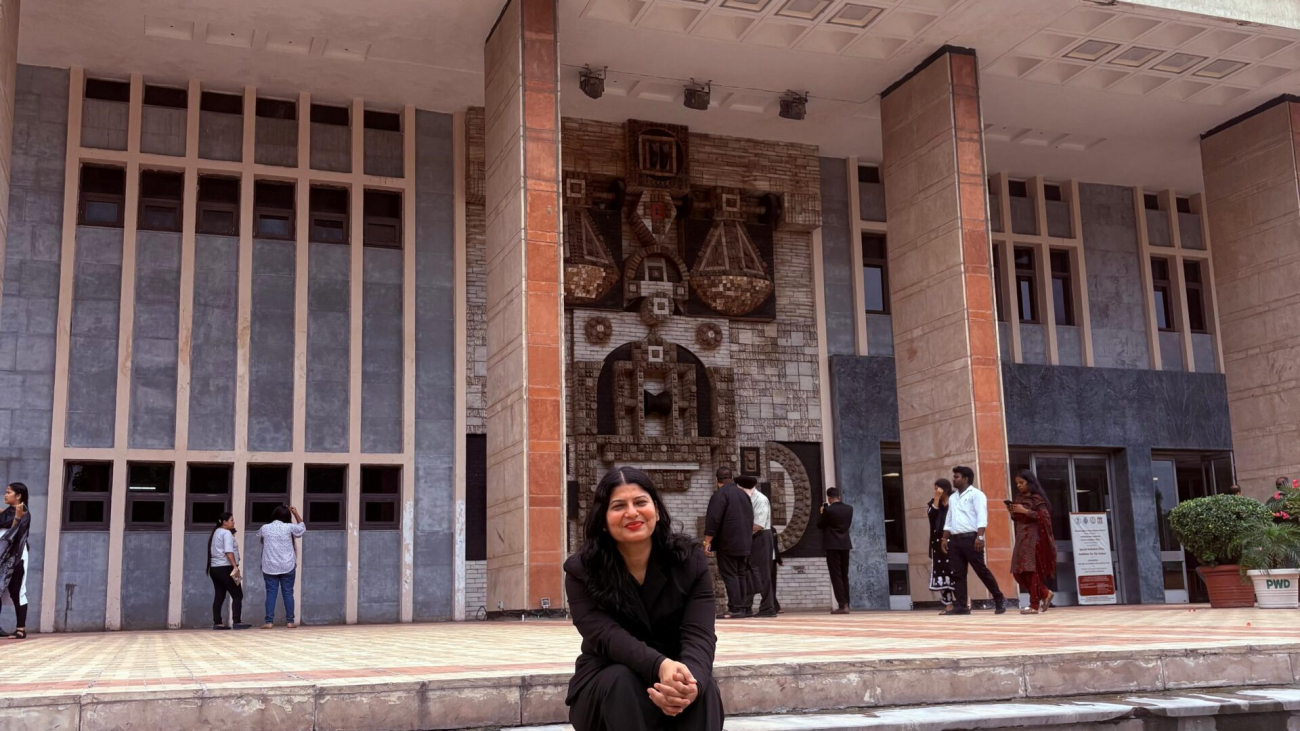
Best Advocate in Dwarka

MOST IMPORTANT COURT APPLICATIONS

1️. Bail Application

Used to seek release of the accused from custody.

Relevant law:

  • Bharatiya Nagarik Suraksha Sanhita, 2023 Section 480 – Regular Bail
  • Section 482 – Anticipatory Bail
  • Section 483 – Interim Bail

2️. Default Bail Application

Filed when the police fail to file the charge sheet within the prescribed time.

Relevant provision:

  • **Bharatiya Nagarik Suraksha Sanhita, 2023 Section 187

3️. Discharge Application

Filed before the trial begins when the accused claims that no prima facie case exists.

Relevant provision:

  • **Bharatiya Nagarik Suraksha Sanhita, 2023 Sections 250 / 251

4️. Application for Framing of Additional Charges

Filed when prosecution wants additional charges.

Relevant provision:

  • **Bharatiya Nagarik Suraksha Sanhita, 2023 Section 244

5️. Application for Summoning Additional Accused

Filed when evidence shows involvement of another person.

Relevant provision:

  • **Bharatiya Nagarik Suraksha Sanhita, 2023 Section 358

6️. Application for Recall / Re-examination of Witness

Filed to recall a witness for further examination.

Relevant provision:

  • **Bharatiya Nagarik Suraksha Sanhita, 2023 Section 348

7️. Application for Exemption from Personal Appearance

Filed when accused cannot attend court personally.

Relevant provision:

  • **Bharatiya Nagarik Suraksha Sanhita, 2023 Section 228

8️. Application for Cancellation of NBW

Filed when a Non-Bailable Warrant has been issued.

Relevant provision:

  • **Bharatiya Nagarik Suraksha Sanhita, 2023 Section 70 / 73

9️. Application for Compounding of Offence

Filed when parties compromise in compoundable offences.

Relevant provision:

  • **Bharatiya Nagarik Suraksha Sanhita, 2023 Section 359

10. Application for Plea Bargaining

Used when the accused accepts guilt and seeks lesser punishment.

Relevant provision:

  • **Bharatiya Nagarik Suraksha Sanhita, 2023 Sections 290/ 265A–265L (earlier CrPC provisions)

Important Applications in Civil Courts

1️. Temporary Injunction Application

Filed to stop someone from doing a particular act.

Relevant provision:

  • **Code of Civil Procedure, 1908 Order 39 Rule 1 & 2

2️. Application for Amendment of Pleadings

Filed to modify pleadings.

Relevant provision:

  • **Code of Civil Procedure, 1908 Order 6 Rule 17

3️. Application for Restoration of Suit

Filed when suit is dismissed for default.

Relevant provision:

  • **Code of Civil Procedure, 1908 Order 9 Rule 9

4️. Application for Setting Aside Ex-Parte Decree

Filed when decree passed without appearance.

Relevant provision:

  • **Code of Civil Procedure, 1908 Order 9 Rule 13

5️. Execution Application

Filed to enforce decree or order.

Relevant provision:

  • **Code of Civil Procedure, 1908 Order 21

Applications Used in Daily Criminal Practice

Advocates frequently file:

  • Bail Application
  • Exemption Application
  • NBW Cancellation Application
  • Discharge Application
  • 311 CrPC Witness Recall Application
  • 319 CrPC Additional Accused Application
  • Compromise Application
  • Default Bail Application

Conclusion

Advocates commonly use bail, discharge, witness recall, exemption, injunction, and execution applications in daily litigation. Knowledge of the relevant procedural sections under BNSS, CPC, and other laws is essential for effective court practice.

These are the applications most frequently used in criminal practice.


Most Important Criminal Court Applications (CrPC & BNSS Sections)

No.Court ApplicationCrPC SectionBNSS Section
1Application for Regular BailSec 437 / 439Sec 480 / 483
2Application for Anticipatory BailSec 438Sec 482
3Application for Default BailSec 167(2)Sec 187(3)
4Application for Cancellation of BailSec 437(5), 439(2)Sec 480(5), 483(2)
5Application for DischargeSec 227 / 239Sec 250 / 263
6Application for Framing of Charge ObjectionSec 228 / 240Sec 251 / 264
7Application for Compounding of OffenceSec 320Sec 359
8Application for Plea BargainingSec 265A–265LSec 290–300
9Application for Recall of WitnessSec 311Sec 348
10Application for Summoning Additional AccusedSec 319Sec 358
11Application for Exemption from Personal AppearanceSec 205 / 317Sec 227 / 382
12Application for Supply of DocumentsSec 207Sec 230
13Application for Further InvestigationSec 173(8)Sec 193(9)
14Application for Quashing of FIRSec 482Sec 528
15Application for MaintenanceSec 125Sec 144
16Application for Alteration of ChargeSec 216Sec 243
17Application for Issuance of Process / SummonsSec 204Sec 227
18Application for Attachment of PropertySec 83Sec 86
19Application for Proclamation of Absconding AccusedSec 82Sec 84
20Application for Compensation to VictimSec 357Sec 396

Most Frequently Used Applications by Advocates (Daily Practice)

1️. Bail Applications

  • Regular Bail
  • Anticipatory Bail
  • Default Bail

These are the most common applications in criminal courts.


2️. Trial Stage Applications

  • Discharge application
  • Recall witness application
  • Summon additional accused application
  • Alteration of charge application

3️. Magistrate Court Applications

  • Exemption from personal appearance
  • Supply of documents
  • Maintenance application

4️. High Court Applications

  • Quashing of FIR
  • Bail under special circumstances

Important Litigation Tip for Advocates

After July 2024, courts increasingly refer to BNSS sections, but many lawyers still mention both sections together in applications.

Example:

“Application under Section 482 of the Bharatiya Nagarik Suraksha Sanhita, 2023 (corresponding to Section 438 of the Code of Criminal Procedure, 1973).”

This avoids confusion during the transition from CrPC to BNSS.


Conclusion

For advocates practicing criminal law, the most important applications revolve around bail, trial procedure, witness examination, investigation issues, and maintenance proceedings, and it is now advisable to mention both CrPC and BNSS sections in pleadings.


For Educational & Legal Awareness
Website: www.ushavatsassociates.in