

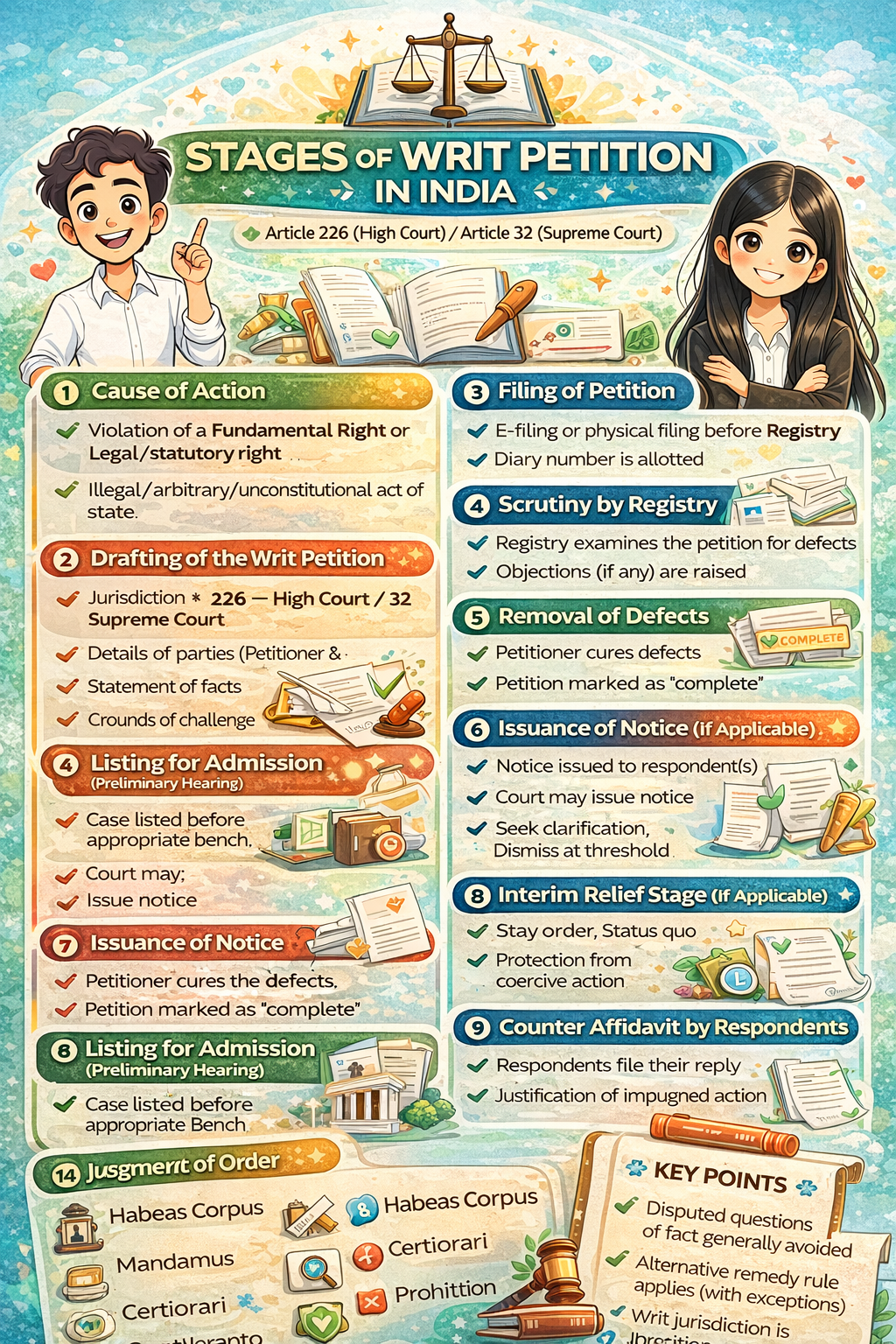
1. Cause of Action
- Violation of a Fundamental Right or legal/statutory right
- Illegal, arbitrary, or unconstitutional act by the State or public authority
2. Drafting of the Writ Petition
The petition is drafted mentioning:
- Jurisdiction (Article 226 – High Court / 32 – Supreme Court)
- Details of parties (Petitioner & Respondents)
- Statement of facts
- Grounds of challenge
- Reliefs sought
- Prayer for interim relief (if any)
- Supporting affidavit and annexures
3. Filing of Petition
- E-filing or physical filing before the Registry
- A diary number / filing number is allotted
4. Scrutiny by Registry
- Registry examines the petition for defects
- Objections (if any) are raised
5. Removal of Defects
- Petitioner/advocate cures defects pointed out by the Registry
- Petition is marked as complete
6. Listing for Admission (Preliminary Hearing)
- Case is listed before the appropriate Bench
- Court may:
- Issue notice
- Seek clarification
- Dismiss the petition at threshold
7. Issuance of Notice
- Notice is issued to the respondent(s)
- Respondents are directed to file their reply
8. Interim Relief Stage (If Applicable)
- Court may grant:
- Stay order
- Status quo
- Protection from coercive action
- Interim relief may be allowed or refused
9. Counter Affidavit by Respondents
- Respondents file their reply
- Justification of the impugned action
10. Rejoinder by Petitioner
- Petitioner files rejoinder
- Reply to the counter affidavit
11. Final Hearing / Arguments
- Detailed oral submissions by both sides
- Reliance on case laws and statutory provisions
12. Judgment Reserved / Pronounced
- Court may reserve judgment or pronounce it immediately
13. Final Order / Judgment
- Petition may be:
- Allowed
- Dismissed
- Partly allowed
- Directions issued to authorities
14. Compliance of Order
- Respondents must comply with the court’s directions
- Non-compliance may lead to Contempt Proceedings
Types of Writs (Quick Reference)
- Habeas Corpus
- Mandamus
- Certiorari
- Prohibition
- Quo Warranto
Key Points
- Generally, disputed questions of fact are avoided
- Alternative remedy rule applies (with exceptions)
- Writ jurisdiction is discretionary and equitable
Our Linkedin
https://www.linkedin.com/in/ushavats/

Add a Comment