best female advocate in delhi

Types of legal notices in india

1. Civil Dispute Notice

Used In: Property disputes, money recovery, agreement breaches, partition, tenancy issues
Purpose: To demand compliance or settlement before filing a civil suit
Key Points:

  • Issued under Section 80 CPC when notice to Government authority is required
  • Explains claim, relief sought, and time given to comply

2. Notice for Breach of Contract

Used In: Failure to perform a contract, delay, non-payment, defective goods/services
Purpose: To give a chance to rectify the breach
Key Points:

  • Must mention contract terms violated
  • Often sent before initiating a suit for specific performance or damages

3. Consumer Complaint Notice

Used In: Defective products, bad services, cheating by sellers or service providers
Purpose: To give the opposite party a chance to resolve before filing with Consumer Commission
Key Points:

  • Helps avoid litigation if the seller resolves the issue

4. Property & Eviction Notice

Used In: Eviction, lease termination, rent defaults, illegal occupation
Purpose: To legally inform tenant/occupant before taking court action
Key Points:

  • Includes time period for vacating (e.g., 15/30 days)
  • Mentions rent defaults, misuse, or violation of tenancy agreement

5. Cheque Bounce Notice (Section 138 NI Act)

Used In: Dishonour of cheque due to insufficient funds, stop payment, signature mismatch
Purpose: To allow the drawer 15 days to pay after dishonour
Key Points:

  • Must be issued within 30 days of cheque bounce
  • Mandatory before filing criminal complaint

6. Family/Matrimonial Dispute Notice

Used In: Divorce, maintenance, child custody, cruelty, restitution of conjugal rights
Purpose: Last opportunity for settlement before litigation
Key Points:

  • Often used in attempts for mutual settlement or mediation

7. Employment / Workplace Notice

Used In: Wrongful termination, unpaid salary, harassment, violation of service contract
Purpose: To record grievance and demand remedy before approaching labour court
Key Points:

  • Important for record-keeping and future litigation

8. Defamation Notice

Used In: False statements harming reputation (written or spoken)
Purpose: To demand apology, retraction, and compensation
Key Points:

  • Often resolves matter without going to court

9. Notice to Government Authorities (Section 80 CPC)

Used In: When suing Government departments, officials, or public bodies
Purpose: Mandatory pre-litigation intimation
Key Points:

  • 2-month notice period
  • Failure may result in rejection of suit

10. Corporate / Business Legal Notice

Used In: Trade disputes, partnership issues, copyright violations, debt recovery
Purpose: Formal warning before legal remedy
Key Points:

  • Often includes strict timelines and consequences

Common Elements in All Legal Notices

  • Name & details of sender
  • Facts of the case
  • Legal grounds of the claim
  • Reliefs demanded
  • Deadline for response (usually 7–30 days)
  • Lawyer details
BEST ADVOCAT IN DELHI

Killing the National Bird (Peacock) — Offence & Punishment in India

Relevant Law:

  • The Indian Peafowl (Peacock) is protected under Schedule I of the Wildlife (Protection) Act, 1972.
  • Killing, hunting, or capturing it is a serious criminal offence under this Act.

 Legal Provision:

  • Section 51 of the Wildlife (Protection) Act, 1972 prescribes the punishment for offences related to protected animals.
  • Since the peacock is a Schedule I species, it receives the highest level of protection.

 Punishment:

  • Imprisonment: Minimum 3 years, which may extend up to 7 years.
  • Fine: Minimum ₹10,000, which may go up to ₹25,000 or more, depending on the case and latest amendments.
  • Both imprisonment and fine can be imposed together.

 No Excuse:

  • Even possessing peacock feathers, meat, or body parts without legal permission is also an offence.
  • Only naturally fallen feathers (not plucked or obtained from killing) are allowed to be possessed in limited quantity, and even that is regulated.

 Exceptions:

  • The only limited defence allowed is self-defence or sudden necessity (for example, if the bird attacked and you acted to save yourself).
  • This must be proven in court.

 What to Do if You See Someone Killing or Selling Peacock:

  1. Immediately inform the Forest Department or local Police Station.
  2. Provide evidence such as photos, location, and details.
  3. Authorities can register a case under the Wildlife (Protection) Act, 1972 – Section 51.

Summary:

OffenceLawPunishment
Killing or hunting a PeacockWildlife (Protection) Act, 1972 – Sec. 513–7 years imprisonment + ₹10,000–₹25,000 fine
BEST ADVOCATE IN DELHI

TYPES OF COURT ORDERS IN INDIA

Here’s a complete and detailed summary on “Types of Court Orders in India” — explained with classification, purpose, key characteristics, timing, and examples for each.
This will help you understand the hierarchy and functioning of different types of orders passed by Indian courts under civil and criminal procedure law.


TYPES OF COURT ORDERS IN INDIA


1. Interim Order (Temporary Order)

Meaning:
An order passed during the pendency of a case to preserve the status quo or protect the interests of parties until the final judgment.

Purpose:
To prevent irreparable loss or injustice before the case is finally decided.

Key Characteristics:

  • Temporary in nature
  • Issued under Section 94 & Order 39 CPC (Civil)
  • Remains in force till further orders or disposal

Timing: During the trial
Example: Stay order, temporary injunction, maintenance order during divorce proceedings.


2. Final Order

Meaning:
An order that concludes the case, determining the rights and liabilities of the parties.

Purpose:
To settle the dispute conclusively.

Key Characteristics:

  • Brings litigation to an end
  • Enforceable decree/judgment follows
  • Can be appealed against

Timing: At the end of the case
Example: A final decree in a property suit or a final judgment in a criminal trial.


3. Interlocutory Order

Meaning:
An order made during proceedings to assist in the progress of the case but not deciding the final rights.

Purpose:
To facilitate smooth conduct of proceedings.

Key Characteristics:

  • Procedural in nature
  • Non-final; doesn’t determine rights
  • Generally not appealable (Sec 397(2) CrPC)

Timing: During proceedings before final judgment
Example: Granting bail, summoning a witness, or adjournment order.


4. Ex-Parte Order

Meaning:
An order passed without hearing the opposite party, usually due to non-appearance.

Purpose:
To ensure proceedings are not delayed because of one party’s absence.

Key Characteristics:

  • Based on one party’s evidence
  • Can be set aside under Order 9 Rule 13 CPC if sufficient cause shown

Timing: When one party fails to appear
Example: Ex-parte injunction restraining a party from alienating property.


5. Decree (Civil Cases)

Meaning:
A formal expression of adjudication conclusively determining rights of parties (Section 2(2) CPC).

Types:

  • Preliminary Decree: Determines rights but requires further action (e.g., partition suit).
  • Final Decree: Completely disposes of the suit.

Purpose:
To record the decision of the court on substantive issues.

Key Characteristics:

  • Enforceable by execution
  • Subject to appeal

Example: Decree for possession or recovery of money.


6. Order of Injunction

Meaning:
An order restraining a party from doing or compelling them to do a particular act.

Types:

  • Temporary Injunction (Order 39 CPC)
  • Permanent Injunction (Section 38 Specific Relief Act)

Purpose:
To maintain status quo or prevent irreparable harm.

Timing: Interim or final stage
Example: Restraining a builder from constructing on disputed land.


7. Stay Order

Meaning:
A direction from the court to temporarily halt proceedings or actions until further notice.

Purpose:
To prevent parallel or conflicting actions.

Example: High Court staying trial court proceedings pending appeal.


8. Consent Order / Compromise Order

Meaning:
An order based on mutual consent of parties recorded by the court.

Purpose:
To resolve disputes amicably.

Key Characteristics:

  • Binding like a decree
  • Based on voluntary agreement

Example: Settlement recorded in a divorce or civil dispute.


9. Remand Order

Meaning:
When a higher court sends a case back to a lower court for retrial or reconsideration.

Purpose:
To correct errors or omissions by the lower court.

Example: Appellate court remanding matter to trial court due to improper evidence recording.


10. Writ Orders (Constitutional)

Meaning:
Orders issued under Articles 32 & 226 of the Constitution for enforcement of fundamental rights.

Types:

  1. Habeas Corpus – Release of unlawful detention
  2. Mandamus – To compel performance of duty
  3. Prohibition – To prevent overreach by lower courts
  4. Certiorari – To quash unlawful orders
  5. Quo Warranto – To question authority to hold office

Purpose:
To protect constitutional and legal rights of citizens.


11. Order of Dismissal

Meaning:
Court rejects a case or application either on merits or technical grounds.

Example: Case dismissed for default, limitation, or lack of evidence.


Landmark Case Laws

CasePrinciple Established
Manohar Lal v. Seth Hiralal (1962 AIR 527)Explained interim injunction powers under Section 94 CPC
Madhu Limaye v. State of Maharashtra (1977 AIR 47)Distinguished interlocutory from final orders under CrPC
Shiv Shakti Coop. Housing v. Swaraj Developers (2003)Defined maintainability of appeals under CPC
Gurbaksh Singh Sibbia v. State of Punjab (1980)Explained anticipatory bail as an interim order
K.K. Velusamy v. N. Palanisamy (2011)Clarified powers of courts to pass interlocutory orders

Quick Summary Table

Type of OrderStagePurposeNatureExample
InterimDuring caseProtect interestTemporaryStay order
FinalEnd of caseDecide rightsPermanentFinal decree
InterlocutoryDuring trialProcedural aidTemporaryBail order
Ex-ParteDuring trialExpedite caseOne-sidedEx-parte injunction
DecreeAfter trialConclude disputeBindingRecovery decree
WritConstitutionalEnforce rightsExtraordinaryHabeas corpus
BEST ADVOCATE IN DELHI

CLASSIFICATION OF LAW IN INDIA

The Indian Legal System is primarily derived from English Common Law and is divided into Public Law and Private Law.
Let’s explore each category in detail


1️. Public Law

Meaning:

Public law deals with the relationship between the State and individuals.
It regulates how the government functions and protects public rights.

Sub-Divisions of Public Law:

(a) Constitutional Law

  • Governs the structure of the government, division of powers, and citizens’ fundamental rights.
  • Source: Constitution of India, 1950.
  • Example: Separation of powers between the Union and States (Articles 245–254).

Landmark Case Laws:

  1. Kesavananda Bharati v. State of Kerala (1973) — Basic structure doctrine.
  2. Maneka Gandhi v. Union of India (1978) — Expanded scope of Article 21 (Right to Life).

(b) Administrative Law

  • Governs the actions and powers of administrative authorities (like police, tribunals, commissions, etc.).
  • Ensures that executive power is exercised lawfully and fairly.

Landmark Case Laws:

  1. A.K. Kraipak v. Union of India (1969) — Natural justice principles.
  2. State of Orissa v. Binapani Dei (1967) — Right to be heard before adverse administrative action.

(c) Criminal Law

  • Deals with offenses against the State or society and provides punishment for wrongdoers.
  • Objective: Protection of society, deterrence, and justice.
  • Sources:
    • Bharatiya Nyaya Sanhita (BNS), 2023 (replacing IPC, 1860)
    • Bharatiya Nagarik Suraksha Sanhita (BNSS), 2023 (replacing CrPC, 1973)
    • Bharatiya Sakshya Adhiniyam (BSA), 2023 (replacing Evidence Act, 1872)

Landmark Case Laws:

  1. Lalita Kumari v. Govt. of U.P. (2014) — FIR registration mandatory in cognizable offenses.
  2. State of Haryana v. Bhajan Lal (1992) — Guidelines for quashing FIRs.

2. Private Law

Meaning:

Private law deals with disputes between individuals or organizations, where compensation or enforcement of rights is sought rather than punishment.

Sub-Divisions of Private Law:

(a) Civil Law

  • Protects private rights and remedies.
  • Covers property, contract, torts, family, and succession matters.
  • Procedure: Governed by the Civil Procedure Code (CPC), 1908.

Landmark Case Laws:

  1. Hadley v. Baxendale (1854) — Rule for compensation in breach of contract.
  2. Vishaka v. State of Rajasthan (1997) — Guidelines for sexual harassment at workplace.

(b) Commercial / Corporate Law

  • Governs companies, partnerships, trade, and business activities.
  • Ensures compliance, transparency, and shareholder protection.
  • Key Acts:
    • Companies Act, 2013
    • Insolvency and Bankruptcy Code (IBC), 2016
    • SEBI Act, 1992

Landmark Case Laws:

  1. Salomon v. Salomon & Co. (1897) — Company as a separate legal entity.
  2. Tata Consultancy Services v. Cyrus Investments (2021) — Corporate governance.

(c) Law of Torts

  • Deals with civil wrongs not arising from contract.
  • Purpose: To provide compensation for harm caused by one person to another.

Examples: Negligence, nuisance, defamation, trespass.

Landmark Case Laws:

  1. Donoghue v. Stevenson (1932) — Foundation of negligence law.
  2. M.C. Mehta v. Union of India (Oleum Gas Leak Case, 1987) — Introduced absolute liability principle.

(d) Family Law

  • Governs marriage, divorce, adoption, maintenance, and inheritance.
  • Different personal laws for different religions:
    • Hindu Marriage Act, 1955
    • Muslim Personal Law (Shariat) Application Act, 1937
    • Special Marriage Act, 1954

Landmark Case Laws:

  1. Shah Bano Begum v. Union of India (1985) — Right to maintenance under Section 125 CrPC.
  2. Sarla Mudgal v. Union of India (1995) — Polygamy and uniform civil code.

3. Substantive Law vs. Procedural Law

BasisSubstantive LawProcedural Law
MeaningDefines rights, duties, and liabilities of individuals.Prescribes the process to enforce those rights and liabilities.
ExamplesIPC, Contract Act, Hindu Marriage ActCPC, CrPC, Evidence Act
FunctionEstablishes what constitutes a legal right/wrong.Describes how a case is filed, tried, and adjudicated.
NatureStatic in natureDynamic and changing with reforms

4. Other Important Classifications

(a) Substantive Civil Law

  • Example: Transfer of Property Act, 1882; Indian Contract Act, 1872.

(b) Substantive Criminal Law

  • Example: Bharatiya Nyaya Sanhita, 2023 (earlier IPC, 1860).

(c) Procedural Civil Law

  • Example: Code of Civil Procedure (CPC), 1908.

(d) Procedural Criminal Law

  • Example: Bharatiya Nagarik Suraksha Sanhita (BNSS), 2023 (earlier CrPC, 1973).

Summary Chart:

Type of LawPurposeExample ActsForum / AuthorityFamous Cases
ConstitutionalDefines government structure & citizens’ rightsConstitution of IndiaSupreme Court, High CourtKesavananda Bharati (1973)
AdministrativeControls government powersTribunals ActCAT, SAT, TribunalsA.K. Kraipak (1969)
CriminalPunish offendersBNS, BNSSCriminal Courts, Sessions CourtBhajan Lal (1992)
CivilResolve private disputesCPC, Contract ActCivil Courts, District CourtsVishaka (1997)
CorporateRegulate companiesCompanies ActNCLT, NCLAT, SEBITCS v. Cyrus (2021)
TortsCompensate for private wrongsCommon LawCivil CourtsM.C. Mehta (1987)
FamilyMarriage, divorce, maintenanceHindu Marriage ActFamily CourtShah Bano (1985)

Conclusion

Indian Law is a comprehensive and multi-layered system balancing:

  • Public interest (through public law),
  • Private rights (through civil and personal laws), and
  • Economic regulation (through corporate and commercial laws).

Together, these branches ensure justice, equality, and rule of law in India.

best advocate in delhi

DIFFERENCE BETWEEN CIVIL LAW, CRIMINAL LAW, AND CORPORATE LAW

1. CIVIL LAW

Meaning:

Civil law deals with disputes between individuals, organizations, or both, where one party seeks compensation or enforcement of rights rather than punishment.

Objective:

To protect the private rights of individuals and provide relief or compensation to the aggrieved party.

Examples:

  • Breach of contract
  • Property disputes
  • Divorce or maintenance cases
  • Partition suits
  • Recovery of money

Legal Provisions:

  • Code of Civil Procedure, 1908 (CPC)
  • Indian Contract Act, 1872
  • Specific Relief Act, 1963
  • Transfer of Property Act, 1882

Procedure:

  1. Filing of plaint by plaintiff.
  2. Summons to defendant.
  3. Written statement by defendant.
  4. Framing of issues.
  5. Evidence and arguments.
  6. Judgment and decree.

Standard of Proof:

Preponderance of probabilities — means the version which seems more likely to be true.

Remedy:

  • Compensation
  • Injunction
  • Declaration
  • Specific performance

Landmark Case Laws:

  1. Keshavananda Bharati v. State of Kerala (1973) 4 SCC 225 — Defined the basic structure doctrine in constitutional interpretation (civil rights).
  2. Hadley v. Baxendale (1854) 9 Exch 341 — Classic case on breach of contract and damages.
  3. Maneka Gandhi v. Union of India (1978) 1 SCC 248 — Civil liberty case expanding Article 21.

2. CRIMINAL LAW

Meaning:

Criminal law deals with offences against the State or society and prescribes punishments for offenders.

Objective:

To maintain law and order, ensure public safety, and punish wrongdoers.

Examples:

  • Murder (Sec. 302 IPC)
  • Theft (Sec. 379 IPC)
  • Rape (Sec. 376 IPC)
  • Cheating (Sec. 420 IPC)
  • Assault (Sec. 351 IPC)

Legal Provisions:

  • Bharatiya Nyaya Sanhita (BNS), 2023 (replacing IPC, 1860)
  • Bharatiya Nagarik Suraksha Sanhita (BNSS), 2023 (replacing CrPC, 1973)
  • Bharatiya Sakshya Adhiniyam (BSA), 2023 (replacing Indian Evidence Act, 1872)

Procedure:

  1. FIR registration (Sec. 154 CrPC/BNSS).
  2. Investigation and charge sheet.
  3. Framing of charges.
  4. Trial and evidence.
  5. Judgment: conviction or acquittal.

Standard of Proof:

Beyond reasonable doubt.

Remedy:

  • Imprisonment
  • Fine
  • Death penalty (in rare cases)
  • Probation or community service

Landmark Case Laws:

  1. State of U.P. v. Ram Swarup (1974) 4 SCC 764 — Defined murder vs. culpable homicide distinction.
  2. State of Haryana v. Bhajan Lal (1992 Supp (1) SCC 335) — Guidelines for quashing FIRs under Section 482 CrPC.
  3. Lalita Kumari v. Govt. of U.P. (2014) 2 SCC 1 — Mandatory registration of FIR in cognizable offences.

3. CORPORATE LAW (Company/Business Law)

Meaning:

Corporate law governs the formation, management, and regulation of companies and their dealings with stakeholders, shareholders, and the public.

Objective:

To regulate business entities, ensure corporate governance, protect shareholders’ interests, and maintain fair trade practices.

Examples:

  • Incorporation of a company
  • Mergers and acquisitions
  • Corporate fraud or insider trading
  • Corporate compliance and governance issues

Legal Provisions:

  • Companies Act, 2013
  • Limited Liability Partnership Act, 2008
  • SEBI Act, 1992
  • Insolvency and Bankruptcy Code (IBC), 2016

Procedure (for disputes):

  1. File case before NCLT (National Company Law Tribunal).
  2. Appeal to NCLAT.
  3. Further appeal to Supreme Court.

Standard of Proof:

Preponderance of probabilities (similar to civil standard).

Remedy:

  • Corporate restructuring
  • Liquidation or insolvency resolution
  • Compensation to shareholders
  • Penal action for fraud or non-compliance

Landmark Case Laws:

  1. Tata Consultancy Services v. Cyrus Investments Pvt. Ltd. (2021) 9 SCC 449 — Landmark on corporate governance and minority shareholder rights.
  2. Vodafone International Holdings BV v. Union of India (2012) 6 SCC 613 — Landmark case on taxation of offshore transactions.
  3. Swiss Ribbons Pvt. Ltd. v. Union of India (2019) 4 SCC 17 — Upheld the constitutional validity of the Insolvency and Bankruptcy Code (IBC).

COMPARATIVE SUMMARY TABLE

FeatureCivil LawCriminal LawCorporate Law
Nature of wrongPrivate wrongPublic wrongCommercial or organizational wrong
ObjectiveCompensation / reliefPunishment / deterrenceRegulation of business and compliance
Parties involvedPlaintiff vs. DefendantState vs. AccusedCompany vs. Shareholders / Regulatory body
Legal basisCPC, Contract Act, etc.IPC/BNS, CrPC/BNSSCompanies Act, IBC, SEBI Act
Standard of proofPreponderance of probabilityBeyond reasonable doubtPreponderance of probability
OutcomeCompensation / injunctionPunishment / fine / imprisonmentRegulation / restructuring / penalty
ForumCivil Courts / District CourtsCriminal Courts / Sessions CourtsNCLT, NCLAT, SEBI, High Court
AppealHigher Civil Courts / HC / SCHigher Criminal Courts / HC / SCNCLAT / SC
Example CaseHadley v. BaxendaleLalita Kumari v. U.P.TCS v. Cyrus Investments

Conclusion

  • Civil Law protects private rights and aims for compensation.
  • Criminal Law protects society and seeks punishment for wrongdoers.
  • Corporate Law ensures orderly business conduct, transparency, and shareholder protection.

Together, these three pillars maintain justice, order, and economic stability in society.


Difference Between Civil, Criminal, and Corporate Law Table

BasisCivil LawCriminal LawCorporate Law
MeaningCivil law deals with disputes between individuals, organizations, or both, where compensation may be awarded to the victim.Criminal law deals with offenses against the state or society, prescribing punishment for the wrongdoer.Corporate law governs the formation, operation, and regulation of companies and corporate entities.
ObjectiveTo resolve private disputes and provide compensation or specific performance.To punish the offender and maintain law and order.To ensure legal compliance, corporate governance, and protect shareholders’ interests.
Parties InvolvedPlaintiff vs. DefendantState (Prosecution) vs. AccusedCompany, shareholders, directors, regulators (like MCA, SEBI)
Burden of Proof“Preponderance of probabilities” (balance of evidence)“Beyond reasonable doubt”Based on corporate statutes and documentary compliance
Governing LawCivil Procedure Code (CPC), 1908Criminal Procedure Code (CrPC), 1973 and Indian Penal Code (IPC), 1860Companies Act, 2013; SEBI Act, FEMA, Insolvency & Bankruptcy Code (IBC), etc.
Nature of WrongPrivate wrongPublic wrongStatutory or regulatory wrong
ExamplesBreach of contract, property disputes, matrimonial disputes, tortsMurder, theft, assault, fraudIncorporation, mergers, director’s duties, shareholder rights
Outcome / RemedyCompensation, injunction, specific performanceImprisonment, fine, or bothCompliance orders, penalties, winding up, restructuring
Court JurisdictionCivil Courts, Family Courts, Consumer ForumsCriminal Courts, Sessions Courts, High CourtNCLT, NCLAT, SEBI, High Court, Supreme Court
ProcedureGoverned by CPC; focuses on evidence and documentsGoverned by CrPC; focuses on investigation and trialGoverned by Companies Act & NCLT Rules
AppealAppeal lies to District Court/High CourtAppeal lies to Sessions Court/High CourtAppeal lies to NCLAT/Supreme Court

Landmark Case Laws

Civil Law Cases

  1. Keshavananda Bharati v. State of Kerala (1973)
    Held: The Constitution’s basic structure cannot be altered by Parliament.
    Principle: Protects citizens’ fundamental rights and property rights.
  2. Hadley v. Baxendale (1854)
    Held: Damages in contract law must be foreseeable.
    Principle: Basis for assessing compensation in breach of contract cases.
  3. Vishaka v. State of Rajasthan (1997)
    Held: Established guidelines for preventing sexual harassment at workplaces.
    Principle: Protection of women’s rights under civil and constitutional law.

Criminal Law Cases

  1. State of Rajasthan v. Kashi Ram (2006)
    Held: Burden of proof in criminal cases lies entirely on the prosecution.
    Principle: Accused presumed innocent until proven guilty.
  2. Maneka Gandhi v. Union of India (1978)
    Held: Expanded the scope of Article 21 (Right to Life and Liberty).
    Principle: Fair trial and due process are essential components of criminal justice.
  3. State of Haryana v. Bhajan Lal (1992)
    Held: Laid down guidelines for quashing FIRs under Section 482 CrPC.
    Principle: Prevents misuse of criminal proceedings.

Corporate Law Cases

  1. Salomon v. Salomon & Co. Ltd. (1897)
    Held: Company has a separate legal entity from its shareholders.
    Principle: Foundation of corporate personality.
  2. Tata Consultancy Services v. State of Andhra Pradesh (2004)
    Held: Software can be treated as “goods” for taxation.
    Principle: Defines corporate transactions under tax and commercial law.
  3. PNB v. Mehul Choksi (2018)
    Held: Strengthened the role of IBC and enforcement agencies in financial frauds.
    Principle: Corporate accountability and creditor protection.

Summary Chart

AspectCivil LawCriminal LawCorporate Law
NatureCompensatoryPunitiveRegulatory
AimPrivate justicePublic justiceCorporate governance
RemedyDamages/reliefPunishmentCompliance/penalty
ExampleContract disputeTheft, murderMerger, fraud
AuthorityCivil CourtsCriminal CourtsNCLT, SEBI, MCA

Conclusion

Civil, Criminal, and Corporate laws are three major branches of the Indian legal system:

  • Civil law protects individual rights.
  • Criminal law ensures societal order and justice.
  • Corporate law governs commercial entities and business compliance.

Together, they form a comprehensive legal framework ensuring justice, accountability, and economic discipline.

BEST ADVOCATE IN DWARKA, DELHI

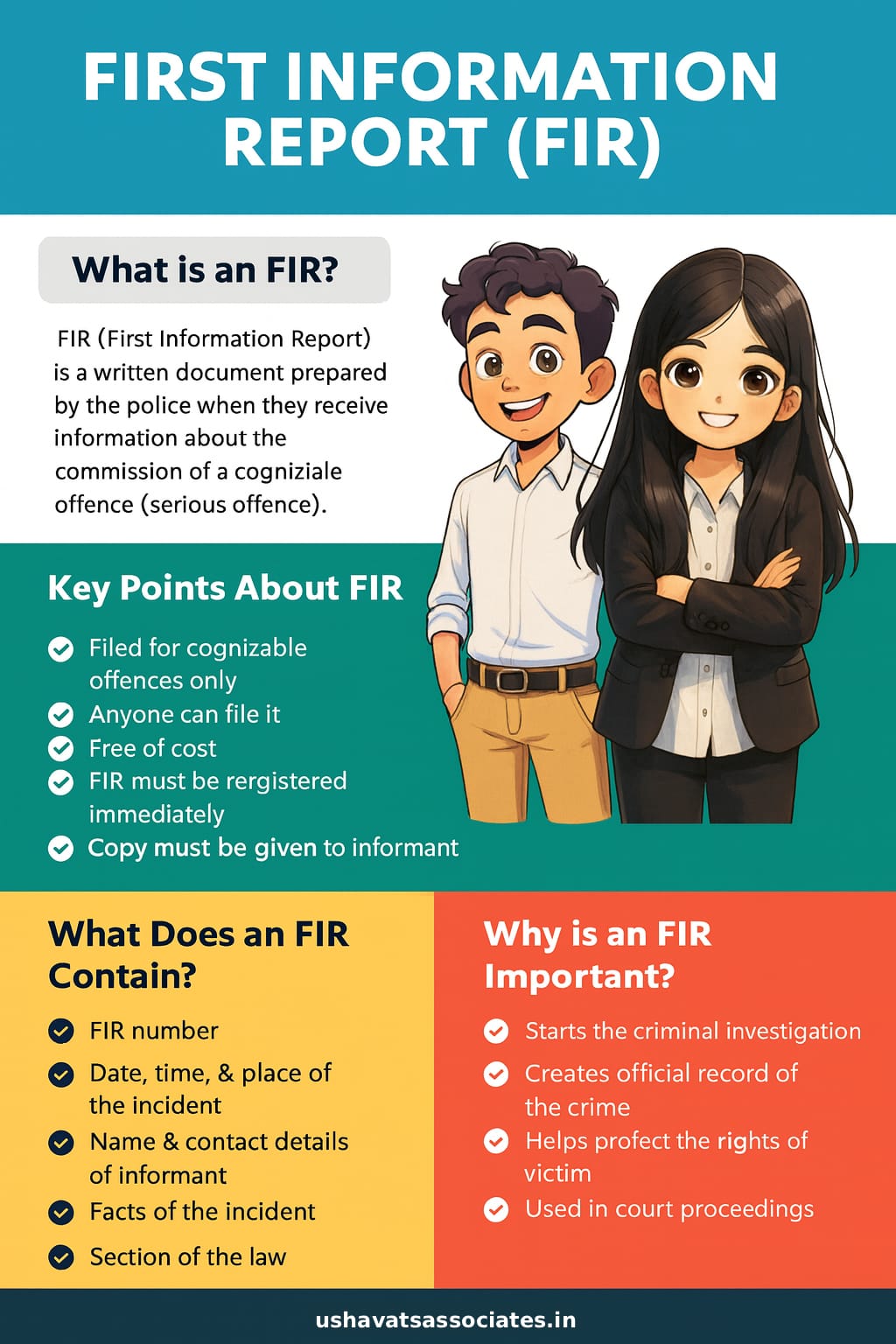
Legal Remedies When Police Refuse to Register FIR

If the police refuse to register an FIR, the law provides several clear remedies under the Criminal Procedure Code (CrPC), 1973 and supported by landmark judgments.
Here’s a step-by-step guide.

 Legal Remedies When Police Refuse to Register FIR

1. Approach the Senior Police Officer (Section 154(3) CrPC)

  1. Provision: Section 154(3) CrPC
  2. Remedy: Write a complaint to the Superintendent of Police (SP) or Deputy Inspector General (DIG).
  3. Process: 
    1. Submit a written application explaining that the local police refused to register your FIR.
    1. The SP can investigate the matter himself or direct a subordinate officer to do so.

2. File a Complaint Before the Magistrate (Section 156(3) CrPC)

  1. Provision: Section 156(3) CrPC empowers the Judicial Magistrate to direct the police to register and investigate the case.
  2. Process: 
    1. File a written criminal complaint before the Magistrate.
    1. Attach evidence or any supporting material (if available).
    1. The Magistrate can order the police to register the FIR and conduct investigation.

3. File a Private Complaint (Section 200 CrPC)

  • If both police and higher officers fail to act, you can file a private complaint under Section 200 CrPC before the Magistrate.
  • The Magistrate can:
    • Record your statement and witnesses, and
    • Take cognizance of the offence directly.

4. Approach Human Rights or Vigilance Authorities

  • For serious misconduct or corruption, complaint can be made to:
    • State Human Rights Commission (SHRC) or National Human Rights Commission (NHRC)
    • State Police Complaints Authority

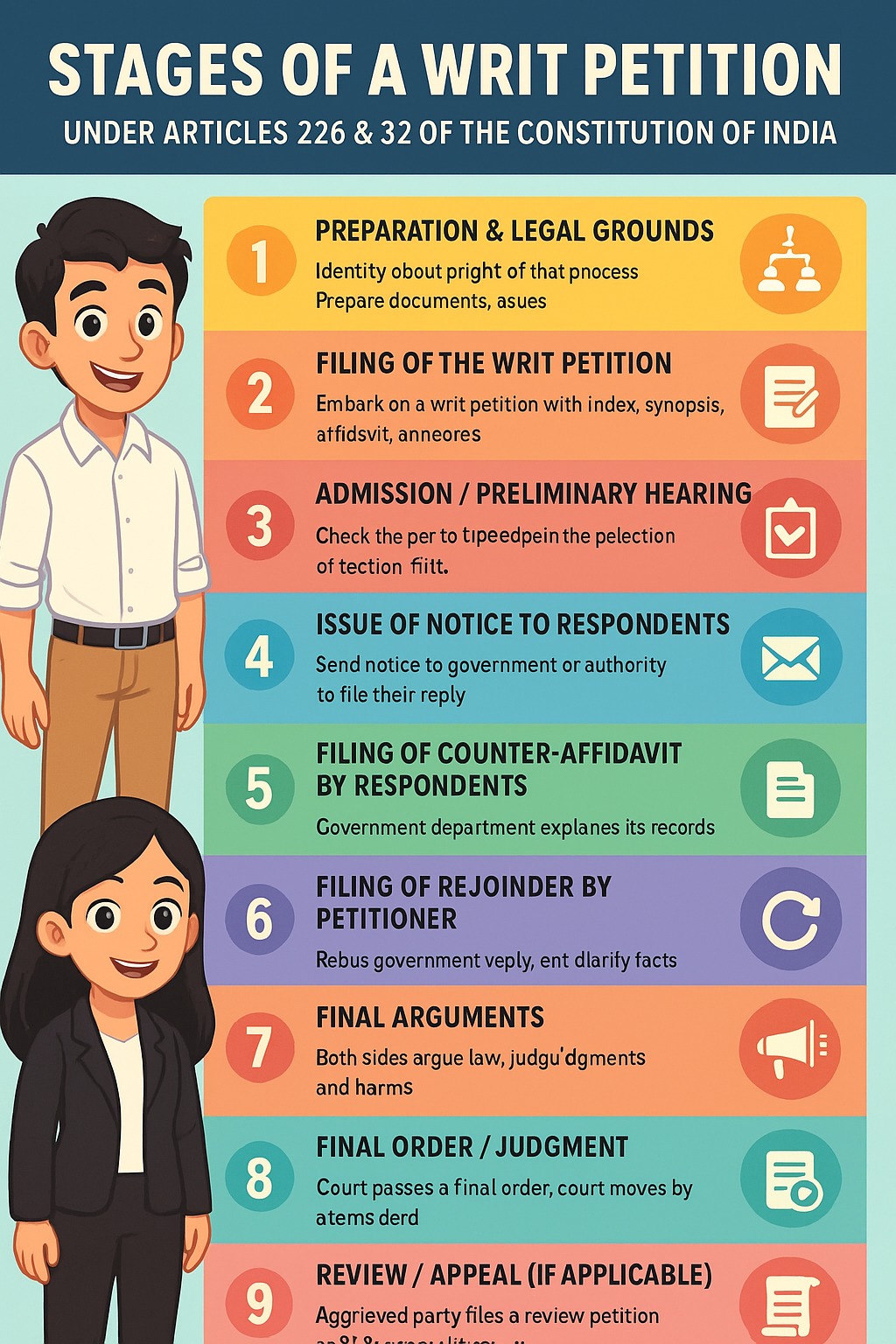
5. File a Writ Petition (Article 226, Constitution of India)

  • As a last resort, file a writ petition (Mandamus) in the High Court seeking directions for:
    • Registration of FIR, and
    • Proper investigation.

Landmark Judgments

Case NamePrinciple / Ruling
Lalita Kumari v. Govt. of U.P. (2014) 2 SCC 1Registration of FIR is mandatory if information discloses a cognizable offence.
Sakiri Vasu v. State of U.P. (2008) 2 SCC 409If police don’t register FIR, remedy lies under Section 156(3) CrPC, not directly before High Court.
Aleque Padamsee v. Union of India (2007) 6 SCC 171High Court can direct police to perform their statutory duty to register FIR.
Prakash Singh v. Union of India (2006) 8 SCC 1Established Police Reforms and accountability mechanisms.

Summary Table

StepLegal ProvisionAuthorityOutcome
Step 1Sec. 154(3) CrPCSuperintendent of PoliceSP can order FIR registration
Step 2Sec. 156(3) CrPCJudicial MagistrateMagistrate can order police to register and investigate
Step 3Sec. 200 CrPCMagistrateFile private complaint directly
Step 4Administrative remedyNHRC/Police AuthorityDisciplinary action possible
Step 5Article 226High CourtWrit of mandamus to ensure FIR registration
best advocate in delhi

Which path you should choose law:

Comparison to help you decide between Litigation and Corporate Law

Litigation

Nature of Work:

  • Represents clients in court (civil, criminal, or constitutional matters)
  • Conducts arguments, cross-examinations, and filings
  • Involves regular court appearances and drafting petitions

Skills Required:

  • Strong oral advocacy
  • In-depth legal research
  • Quick thinking and confidence

Work Environment:

  • Courtrooms, chambers, or independent practice
  • Unpredictable schedules and deadlines

Pros:

  • Opportunity to argue cases and build courtroom reputation
  • High independence once established

Cons:

  • Initial years may have lower income
  • Stressful and long working hours

Corporate Law

Nature of Work:

  • Advises companies on compliance, mergers, contracts, and policies
  • Drafts and reviews agreements and legal documents
  • Works closely with business teams

Skills Required:

  • Strong drafting and negotiation
  • Business and commercial understanding
  • Analytical and detail-oriented mindset

Work Environment:

  • Offices or law firms with structured hours
  • Collaborative, team-based setting

Pros:

  • Stable income and work hours
  • Exposure to business strategy

Cons:

  • Less courtroom experience
  • Can be monotonous for those who enjoy argumentation

Which Should You Choose?

If you enjoy…Choose…
Arguing and public speakingLitigation
Business and corporate structureCorporate Law
Independence and courtroom thrillLitigation
Stability and teamworkCorporate Law