
Usha Vats & Associates | Best Female Advocates in Dwarka Court
Best Female Advocates in Dwarka Court, Best Advocate In Dwarka
Best Female Advocates in Dwarka Court, Best Advocate In Dwarka
| Stage No. | Stage | Description |
|---|---|---|
| 1️⃣ | Filing of Plaint | The plaintiff files a plaint (civil complaint) before the appropriate civil court with court fees, documents, and verification. |
| 2️⃣ | Issue of Summons | If the plaint is admitted, the court issues summons to the defendant under Order V CPC to appear and file a written statement (usually within 30 days, extendable up to 90 days). |
| 3️⃣ | Written Statement | The defendant files their reply and may include set-off or counterclaim (Order VIII CPC). |
| 4️⃣ | Replication (Optional) | Plaintiff may file a replication to the written statement to respond to new facts raised. |
| 5️⃣ | Framing of Issues | Under Order XIV CPC, the court frames issues of fact and law from the pleadings that need to be tried. |
| 6️⃣ | Trial Begins | Both parties present evidence: |
| Month | Event |
|---|---|
| 1 | Filing of plaint |
| 2 | Summons served |
| 3 | Written statement filed |
| 4 | Framing of issues |
| 6-12 | Evidence of parties |
| 13 | Arguments |
| 14 | Judgment + Decree |
| 15 | Execution / Appeal |
Purpose:
To recover possession of property (movable or immovable) or money from a person who has wrongfully taken or retained it.
Key Features:
Examples:
Purpose:
To restrain a party permanently from doing an act that violates the rights of another.
Legal Basis:
Section 38, Specific Relief Act, 1963
Key Features:
Examples:
Purpose:
To compel a party to perform a contract according to its terms, especially when monetary compensation is inadequate.
Legal Basis:
Sections 10-14 of the Specific Relief Act, 1963
Key Features:
Examples:
| Feature | Recovery Suit | Permanent Injunction | Specific Performance |
|---|---|---|---|
| Legal Basis | CPC / Specific Relief Act | Section 38, Specific Relief Act | Sections 10–14, Specific Relief Act |
| Primary Relief | Recovery of possession/money | Prevent a person from doing something | Enforce specific terms of a contract |
| When Used | Loss of possession/money | Risk of ongoing/future violation | Breach of specific, enforceable contract |
| Type of Right Protected | Possessory or monetary | Negative right (to stop interference) | Positive right (to compel performance) |
| Discretionary? | No (legal right) | Yes | Yes |
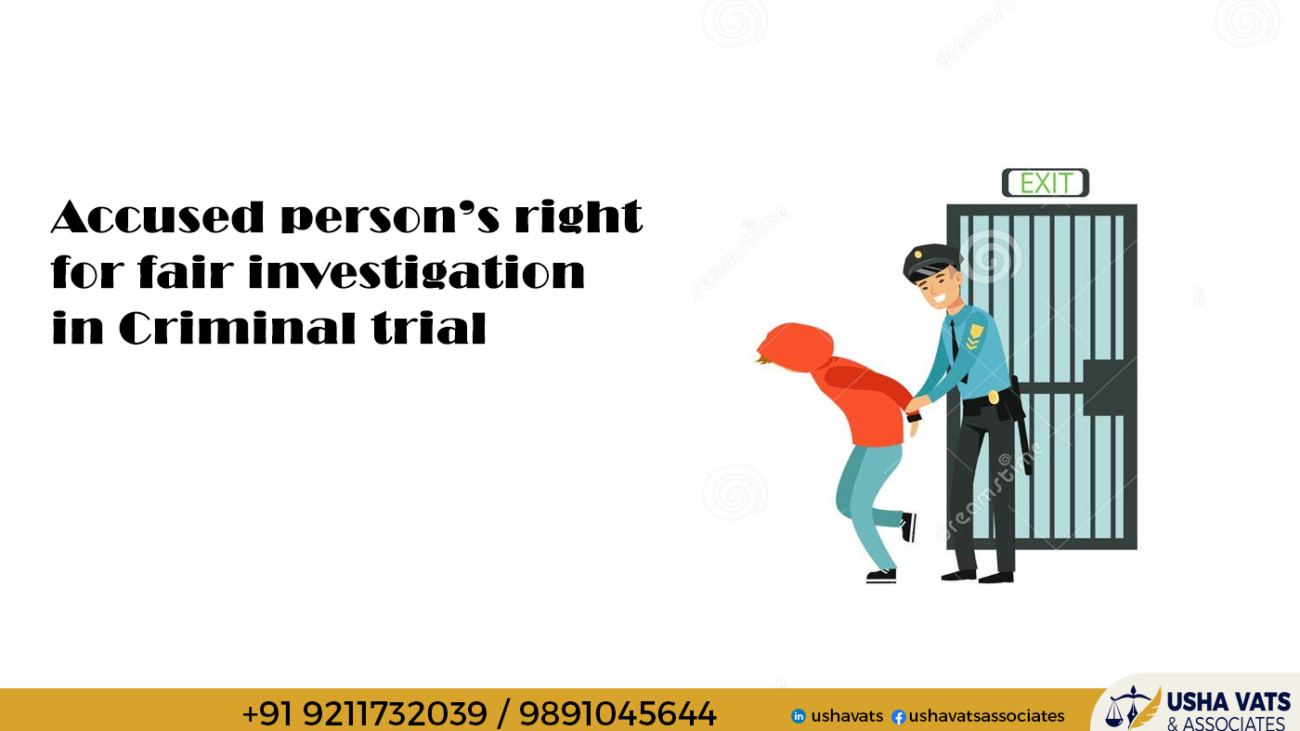
If the police do not properly investigate a criminal case, and this negatively affects the rights of an accused person, the accused can take several legal steps under Indian law to ensure a fair and proper investigation. Here’s what can be done:
1. File an Application to the Magistrate (Under Section 173(3) or 193 of the Bharatiya Nagarik Suraksha Sanhita (BNSS))
The accused can approach the Magistrate if the investigation is unfair, biased, or incomplete.
Under Section 173(3) BNSS: The Magistrate can direct police to conduct a proper investigation.
Under Section 193) BNSS: The accused can request for further investigation if new facts are discovered or if the initial investigation was flawed.
2. File a Protest Petition
If the charge sheet is already submitted and the accused feels it’s false or based on biased investigation, a protest petition can be filed before the Magistrate to point out flaws or request further probe
3. File a Petition in the High Court (Under Section 528 BNSS or Article 226 of the Constitution)
If the police are deliberately acting in a biased or negligent way, the accused can:
File a petition under Section 528 BNSS for quashing proceedings based on improper investigation.
File a writ petition under Article 226 of the Constitution seeking a direction for proper investigation or transfer to another agency like the CBI or Crime Branch.
4. Demand a Fair Trial under Article 21 of the Constitution
The right to a fair investigation is part of the right to life and personal liberty under Article 21.
If the investigation is compromised, the accused can invoke constitutional remedies and seek judicial intervention for a fair process.
5. Challenge the Chargesheet
After police file the chargesheet under Section 173(3) BNSS, the accused can:
File objections to the chargesheet if it is based on a faulty or biased investigation.
Seek discharge before the trial begins if there is insufficient or flawed evidence.
6. File Complaint Against Investigating Officer
The accused may file a complaint to higher police officials or even a vigilance complaint against the Investigating Officer (IO) for negligence or bias.
7. Seek Transfer of Investigation to Independent Agency
If there’s strong evidence of bias or collusion, courts can order transfer of investigation to:
CBI (Central Bureau of Investigation)
Special Investigation Team (SIT)
8. Raise Issues During Trial
The accused can:
Cross-examine witnesses,
Point out flaws in the investigation,
Argue for acquittal based on lack of proper evidence or illegal investigation.
In the Code of Civil Procedure, 1908 (CPC), which governs the procedure for civil litigation in India, there are several important Orders and Rules that form the backbone of civil trials. Here’s a concise list of important Orders and Rules in CPC along with their relevance:
| Order | Title | Purpose/Importance |
|---|---|---|
| Order I | Parties to Suits | Deals with joinder, misjoinder, and non-joinder of parties. |
| Order II | Frame of Suit | Mandates inclusion of all claims to avoid multiple suits. |
| Order V | Issue and Service of Summons | Provides for the process of serving summons to defendants. |
| Order VI | Pleadings Generally | Governs how pleadings (plaint and written statement) are framed. |
| Order VII | Plaint | Lists what a plaint must contain and when it can be rejected. |
| Order VIII | Written Statement, Set-off and Counterclaim | Provides rules regarding the defendant’s reply and counterclaims. |
| Order IX | Appearance of Parties and Consequences of Non-Appearance | Deals with ex parte proceedings and dismissal for default. |
| Order X | Examination of Parties | Allows court to examine parties to clarify issues. |
| Order XI | Discovery and Inspection | Pertains to interrogatories, discovery, and document inspection. |
| Order XII | Admissions | Deals with admission of facts and documents. |
| Order XIII | Production, Impounding and Return of Documents | Governs management of documents during a suit. |
| Order XIV | Settlement of Issues | Focuses on framing and determination of issues for trial. |
| Order XV | Disposal of the Suit at First Hearing | Permits court to decide cases without full trial in clear cases. |
| Order XVI | Summoning and Attendance of Witnesses | Deals with the procedure to summon witnesses. |
| Order XVIII | Hearing of the Suit and Examination of Witnesses | Covers trial procedure including examination-in-chief, cross, and re-examination. |
| Order XX | Judgment and Decree | Explains how judgment is pronounced and decrees drawn. |
| Order XXI | Execution of Decrees and Orders | Key order for executing civil court decisions. |
| Order XXII | Death, Marriage and Insolvency of Parties | Explains substitution of parties after death etc. |
| Order XXIII | Withdrawal and Adjustment of Suits | Deals with withdrawal or compromise of suits. |
| Order XXXIX | Temporary Injunctions and Interlocutory Orders | Crucial for interim reliefs during the pendency of a suit. |
| Order XLI | Appeals from Original Decrees | Governs first appeals from trial court decisions. |
Each Order has multiple rules, but here are a few important Rules often relied upon:

If the police did not properly investigate a criminal case, a common man (complainant or victim) has several legal remedies available in India to seek justice. Here’s what can be done:

The process of resolving a disputed property matter under the Civil Procedure Code (CPC), 1908 involves several key stages. Here’s a step-by-step outline of how such disputes are generally handled in Indian civil courts:

Section 138 of the Negotiable Instruments Act, 1881 (NI Act) deals with the offence of cheque dishonour for insufficiency of funds or if it exceeds the amount arranged to be paid by the drawer. It is a penal provision that makes dishonour of certain cheques a criminal offence.
Essentials of Section 138 NI Act:
To attract Section 138, the following conditions must be satisfied:
Cheque must be drawn on an account maintained by the drawer.
Cheque must be issued for discharge of a legally enforceable debt or liability.
Cheque must be presented within 3 months (or within its validity period, whichever is earlier).
Cheque must be returned/dishonoured by the bank due to:
Insufficient funds, or
Exceeds the amount arranged to be paid.
Payee must send a written demand notice to the drawer within 30 days from receipt of return memo from bank.
Drawer must fail to make payment within 15 days of receipt of such notice.
Procedure under Section 138 NI Act:
1. Dishonour of Cheque
The cheque is deposited and returned unpaid by the bank with a memo (e.g., “Funds insufficient”).
2. Demand Notice
The payee must send a legal notice (preferably via Registered Post/Speed Post) to the drawer within 30 days of receiving information about the dishonour.
The notice must demand payment of the cheque amount within 15 days.
3. No Payment Received
If the drawer fails to pay within 15 days, a cause of action arises.
4. Filing of Complaint
A criminal complaint under Section 138 can be filed within 30 days from the expiry of the 15-day period.
The complaint is filed before a Magistrate of First Class in the local jurisdiction where:
The cheque was presented, or
The bank dishonoured it, or
The notice was sent/received.
5. Court Process
Summons issued to the accused.
Pleadings and Evidence: Both parties submit documents and evidence.
Trial and Arguments.
If proved, punishment can include:
Imprisonment up to 2 years, or
Fine up to twice the cheque amount, or both.
Additional Notes:
Compoundable offence: The matter can be settled anytime during the trial.
Pre-summoning evidence (affidavit & documents) is usually submitted with the complaint.
Section 139 provides presumption in favour of the holder that the cheque was issued for discharge of debt.Activate to view larger image,

— a case that played a crucial role in shaping the balance between Fundamental Rights and Directive Principles of State Policy in the Indian Constitution.
Minerva Mills Ltd. was a private textile company located in Bangalore. In 1970, the Government of India, under the Industries (Development and Regulation) Act, 1951, referred the company for investigation, claiming it was being mismanaged in a manner that was prejudicial to the public interest.
Eventually, under Section 18A of the Act, the management of Minerva Mills was taken over by the Central Government.
The company challenged this action in the High Court, which dismissed their petition. The company then appealed to the Supreme Court of India.
However, this case quickly became much bigger than a company dispute — because it questioned some major constitutional amendments and raised the core issue of the “Basic Structure Doctrine”.
The case was heard in the wake of the infamous Emergency period (1975-1977) under Prime Minister Indira Gandhi, during which several controversial constitutional amendments were made.
Two key provisions were challenged:
It amended Article 31C, stating:
If a law is made to implement any Directive Principle (Part IV), it cannot be struck down on the grounds of violating Fundamental Rights (Part III).
Originally, Article 31C gave this protection only to laws made for Articles 39(b) and 39(c). The 42nd Amendment extended this to all Directive Principles.
It added Clauses (4) and (5) to Article 368, stating that:
No constitutional amendment can be “called into question in any court” on any ground, effectively removing judicial review even for constitutional changes.
These two amendments were seen as an attempt by the Parliament to gain unchecked power, bypassing judicial scrutiny and overriding Fundamental Rights.
The case raised four major questions:
The Constitution Bench (5 judges) delivered a majority verdict (4:1) on 31 July 1980, led by Chief Justice Y.V. Chandrachud.
“The Indian Constitution is founded on the bedrock of the balance between Part III and Part IV. To give absolute primacy to one over the other is to disturb the harmony,” – CJI Chandrachud
“Limited amending power is part of the basic structure… Parliament cannot destroy the essential features of the Constitution.”
“The Constitution is not a mere political document; it is a vehicle of life, and its spirit must be respected.” – Justice Chandrachud

भारत में, अगर कोई व्यक्ति 12 साल तक लगातार किसी निजी संपत्ति पर खुलेआम और बिना किसी रुकावट के कब्जा करता है, तो वह उस संपत्ति पर मालिकाना हक का दावा कर सकता है, जिसे “प्रतिकूल कब्जा” (Adverse Possession) कहते हैं.
यहाँ 12 साल के भूमि नियम के बारे में कुछ महत्वपूर्ण बातें दी गई हैं:
प्रतिकूल कब्जा (Adverse Possession):
यह एक कानूनी सिद्धांत है जिसके तहत, अगर कोई व्यक्ति किसी संपत्ति पर 12 साल तक लगातार, खुलेआम और बिना किसी रुकावट के कब्जा करता है, तो वह उस संपत्ति का मालिक बन सकता है, भले ही वह संपत्ति किसी और की हो.
12 साल की अवधि:
यह नियम केवल निजी संपत्ति पर लागू होता है, सरकारी संपत्ति पर नहीं.
कानूनी अधिकार:
अगर कोई व्यक्ति 12 साल तक किसी संपत्ति पर प्रतिकूल कब्जा करता है, तो वह उस संपत्ति पर मालिकाना हक का दावा कर सकता है और कानूनी रूप से उस संपत्ति का मालिक बन सकता है.
मकान मालिक की जिम्मेदारी:
अगर कोई व्यक्ति अपनी संपत्ति पर प्रतिकूल कब्जे से बचना चाहता है, तो उसे 12 साल की अवधि के भीतर उस पर अपना अधिकार कायम रखना चाहिए.
सरकारी जमीन:
सरकारी जमीन के मामले में, यह अवधि 30 साल तक बढ़ जाती है.
सुप्रीम कोर्ट का फैसला:
सुप्रीम कोर्ट ने कहा है कि संपत्ति के असली मालिक को 12 वर्षों के भीतर अपनी संपत्ति पर दावा करना होगा, अन्यथा वह अपनी कानूनी अधिकारिता खो सकता है.
कानूनी सलाह:
अगर आपको लगता है कि आपकी संपत्ति पर कोई प्रतिकूल कब्जा कर रहा है, तो आपको तुरंत किसी वकील से सलाह लेनी चाहिए