Res Judicata literally means “a matter already judged.”
It prevents the same dispute (same parties, same subject matter) from being relitigated once it has been finally decided by a competent court. Essential Ingredients (Section 11, CPC)
Matter directly and substantially in issue – Must have been in issue in the former suit.
Same parties – Both suits must involve the same parties (or their representatives).
Same title – Parties must have litigated under the same title (capacity, right, or interest).
Competent Court – The former court must have been competent to try the subsequent suit.
Final decision – The matter must have been heard and finally decided.
Directly and substantially – The issue must not be merely collateral or incidental.
Illustration
If A sues B for ownership of land and loses, A cannot bring another suit against B claiming the same land again under the same title.
Doctrinal Basis
Based on two maxims: o Nemo debet bis vexari pro una et eadem causa → No one should be vexed twice for the same cause. o Interest reipublicae ut sit finis litium → It is in public interest that litigation must come to an end.
Please check the PDF documents below for more details.
Criminal law in India deals with offences against society, where the State prosecutes the accused. The types of criminal suits are largely determined by procedure, nature of offence, and trial type.
1. Based on Cognizability
Aspect
CrPC (1973)
BNSS (2023)
Key Changes
Cognizable offences
Police can register FIR & investigate without prior approval of Magistrate (e.g., murder, rape, robbery).
Retained same. FIR now must be recorded digitally (Sec. 173 BNSS) with e-signature and copy given to victim.
Digital system of FIR recording, victim rights more explicit.
Non-Cognizable offences
Police requires Magistrate’s order to investigate (e.g., defamation, public nuisance).
Same provision retained. Complaint can be filed electronically (Sec. 175 BNSS).
Use of technology introduced.
2. Based on Bailability
Aspect
CrPC
BNSS
Key Changes
Bailable offences
Accused has a right to bail (e.g., simple hurt, public nuisance).
Same provision retained.
No major change.
Non-Bailable offences
Bail is discretionary and requires Court’s approval (e.g., murder, rape, dacoity).
Same concept continues, but victim given right to be heard before bail is granted in heinous offences (Sec. 479 BNSS).
Victim participation in bail hearings added.
3. Based on Compoundability
Aspect
CrPC
BNSS
Key Changes
Compoundable offences
Certain offences can be compromised between complainant & accused (e.g., adultery, criminal trespass, hurt).
Retained, but provisions shifted and simplified (Sec. 356–360 BNSS).
Streamlined list; minor adjustments.
Non-Compoundable offences
Serious crimes (e.g., murder, rape, terrorism) cannot be compromised.
Same.
No substantive change.
4. Based on Type of Trial
Trial Type
CrPC Provisions
BNSS Provisions
Changes
Sessions Trial (for serious offences like murder, rape, dacoity)
CrPC Sec. 225–237
BNSS Sec. 247–258
Largely unchanged; timelines for speedy trial added.
Warrant Trial (for offences punishable with imprisonment >2 yrs, but not sessions cases)
CrPC Sec. 238–250
BNSS Sec. 259–272
Digital documents admissible; examination timelines shortened.
Summary trial limit increased to offences punishable up to 3 years. Huge expansion of scope.
5. Special Suits (Complaints)
Type
CrPC
BNSS
Change
Private Complaint Cases
Any individual can file complaint directly before Magistrate (Sec. 200–203 CrPC).
Similar provisions (Sec. 214–216 BNSS).
Slight re-structuring, timelines added for Magistrate to take cognizance.
State Prosecution
Majority of cases filed by Police in name of State.
Same system continues.
Digital police records required.
6. Classification by Punishment
Type
CrPC
BNSS
Change
Capital offences (death penalty cases)
Sessions Court trial with HC confirmation (Sec. 366 CrPC).
Same (Sec. 385 BNSS).
Introduced videography of trial to ensure fairness.
Imprisonment offences
Depending on severity, Sessions/Warrant/Summons trial.
Same.
Digital-first approach.
Fine-only offences
Mostly summary/summons trials.
Same, but disposal time reduced.
Speedier mechanism.
7. Victim-Oriented Changes in BNSS
Victim has right to be heard at bail stage (Sec. 479 BNSS).
Victim entitled to free copy of FIR, chargesheet, judgement digitally.
Witness protection & video-recorded statements mandatory in sexual offence cases.
Key Takeaways
Substance same, procedure modernized: BNSS doesn’t radically alter types of criminal suits from CrPC, but digitizes processes and introduces strict timelines.
Summary trial widened: Petty offences up to 3 years punishment can now be disposed quickly.
Victim empowerment: Victim rights formally recognized in bail, trial, and access to case documents.
Technology integrated: E-FIR, e-summons, video trials, digital records are default.
So, in essence, types of criminal suits remain: Cognizable/Non-cognizable, Bailable/Non-bailable, Compoundable/Non-compoundable, and categorized by trial procedure. The BNSS (2023) mainly strengthens digital justice, timelines, and victim rights while carrying forward the CrPC framework.
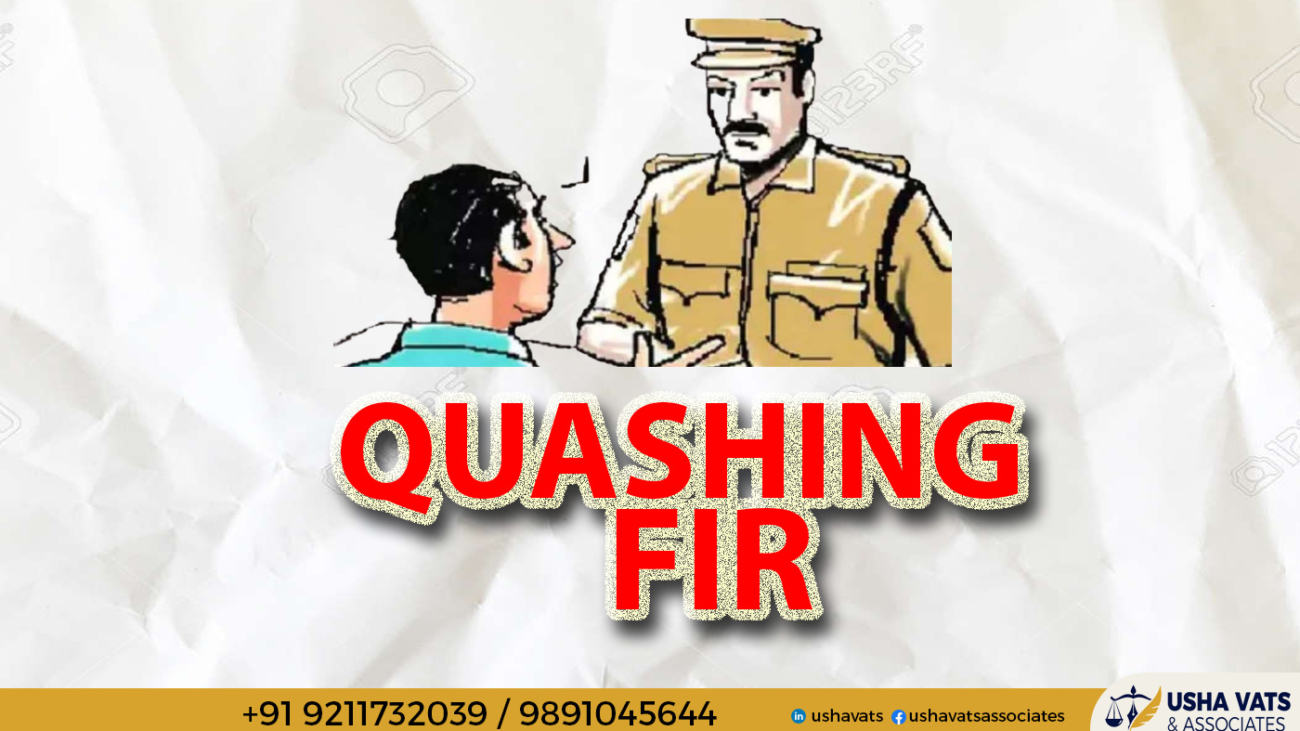
“Quashing of FIR” means that the High Court cancels or sets aside a First Information Report (FIR) or criminal proceedings because the complaint:
does not disclose any offence,
is malicious or false, or
is an abuse of the process of law.
Legal Provision
Section 482 of the Code of Criminal Procedure, 1973 And Section 528 In BNSS.
“Nothing in this Code shall be deemed to limit or affect the inherent powers of the High Court to make such orders as may be necessary (a) to give effect to any order under this Code, (b) to prevent abuse of the process of any Court, or (c) to secure the ends of justice.”
Section 482 CrPC/528 BNSS gives the High Court inherent power to quash FIRs or criminal proceedings when justified.
When FIR Can Be Quashed
Ground
Explanation
1. No Offence Made Out
FIR doesn’t disclose the essential ingredients of the alleged offence.
2. Mala Fide / Vexatious Complaint
FIR filed with intent to harass or settle personal scores.
3. Civil Dispute Dressed as Criminal
Purely civil or commercial disputes wrongly framed as criminal cases (e.g., property, money matters).
4. Compromise Between Parties
In compoundable offences, or in some non-compoundable offences (as per SC guidelines).
5. Lack of Jurisdiction
FIR registered in a police station that has no territorial or subject-matter jurisdiction.
6. Double Jeopardy / Res Judicata
When same facts already adjudicated or another FIR on same matter exists.
7. Absence of Mens Rea
When the FIR lacks intention or knowledge essential to make the act criminal.
Procedure to File Petition for Quashing FIR
File a Petition under Section 482 CrPC/528 BNSS before the High Court having jurisdiction.
Annex Documents: FIR copy, charge sheet (if filed), and relevant papers.
Serve Notice to the State/Prosecution.
Hearing: Both sides argue; Court examines whether FIR discloses any offence.
Order: Court may
Quash the FIR / proceedings, or
Dismiss the petition and allow trial to continue.
Landmark Judgments on Quashing of FIR
Case
Citation
Facts
Principle / Ratio
1. State of Haryana v. Bhajan Lal, 1992 Supp (1) SCC 335
Police registered FIR against a public servant for misuse of power.
SC laid down 7 illustrative categories where FIR can be quashed. (This is the foundational judgment.)
2. R.P. Kapur v. State of Punjab, AIR 1960 SC 866
Allegations were vague and did not make out a cognizable offence.
High Court can quash FIR when no legal evidence or bar in law exists to proceed.
3. Zandu Pharmaceutical Works Ltd. v. Mohd. Sharaful Haque, (2005) 1 SCC 122
Criminal case filed in a civil business dispute.
Quashing justified where proceedings are malicious or abuse of process.
Criminal case initiated to pressure political opponents.
SC held that motives behind complaint can be considered when determining abuse of process.
5. B.S. Joshi v. State of Haryana, (2003) 4 SCC 675
Matrimonial dispute settled between husband and wife.
FIR under 498A IPC quashed after settlement, to secure ends of justice.
6. Gian Singh v. State of Punjab, (2012) 10 SCC 303
Dispute between private parties settled amicably.
Held that even non-compoundable offences can be quashed if civil/personal in nature.
7. Narinder Singh v. State of Punjab, (2014) 6 SCC 466
Offence under 307 IPC but compromise reached.
Guidelines for quashing FIR after compromise — courts must weigh public interest.
8. Parbatbhai Aahir v. State of Gujarat, (2017) 9 SCC 641
SC summarized principles for quashing post-settlement.
Clarified that heinous offences (murder, rape, etc.) should not be quashed even if parties settle.
9. Neeharika Infrastructure Pvt. Ltd. v. State of Maharashtra, (2021) 6 SCC 73
HC stayed investigation at FIR stage.
SC cautioned courts against prematurely stalling investigation unless necessary.
10. State of Telangana v. Habib Abdullah Jeelani, (2017) 2 SCC 779
FIR quashed without proper examination of facts.
Reiterated that High Court must use Section 482 CrPC sparingly and not substitute trial process.
Bhajan Lal 7 Grounds (Classic Guidelines)
The Supreme Court in State of Haryana v. Bhajan Lal (1992) laid down 7 key categories where FIR can be quashed:
FIR does not disclose any cognizable offence.
Allegations are absurd or inherently improbable.
No legal evidence to support allegations.
Allegations made to harass or maliciously prosecute.
There is an express legal bar to proceedings.
FIR is filed for ulterior motives.
Civil nature of dispute disguised as criminal offence.
Illustrative Example
Case Example: A files FIR against B alleging cheating (Section 420 IPC) because B failed to pay ₹2 lakh in a business transaction. This is a civil dispute (breach of contract), not a criminal offence. High Court may quash FIR as abuse of process, relying on Zandu Pharmaceutical and Bhajan Lal principles.
Key Points to Remember
High Courts use Section 482 CrPC sparingly and cautiously.
Investigation should not be halted unless FIR is clearly frivolous or illegal.
Compromise-based quashing allowed only in personal/civil-type offences, not in serious crimes.
FIR cannot be quashed at investigation stage unless allegations are manifestly false.
Summary Table
Aspect
Details
Provision
Section 482 CrPC (Inherent powers of High Court)
Purpose
Prevent abuse of process & secure justice
Stage
Before or after charge-sheet, before trial
Court
High Court only
Leading Case
State of Haryana v. Bhajan Lal (1992)
Effect
FIR and all consequential proceedings stand cancelled
“Quashing of FIR” means that the High Court cancels or sets aside a First Information Report (FIR) or criminal proceedings because the complaint:
does not disclose any offence,
is malicious or false, or
is an abuse of the process of law.
Legal Provision
Section 482 of the Code of Criminal Procedure, 1973 And Section 528 In BNSS.
“Nothing in this Code shall be deemed to limit or affect the inherent powers of the High Court to make such orders as may be necessary (a) to give effect to any order under this Code, (b) to prevent abuse of the process of any Court, or (c) to secure the ends of justice.”
Section 482 CrPC/528 BNSS gives the High Court inherent power to quash FIRs or criminal proceedings when justified.
When FIR Can Be Quashed
Ground
Explanation
1. No Offence Made Out
FIR doesn’t disclose the essential ingredients of the alleged offence.
2. Mala Fide / Vexatious Complaint
FIR filed with intent to harass or settle personal scores.
3. Civil Dispute Dressed as Criminal
Purely civil or commercial disputes wrongly framed as criminal cases (e.g., property, money matters).
4. Compromise Between Parties
In compoundable offences, or in some non-compoundable offences (as per SC guidelines).
5. Lack of Jurisdiction
FIR registered in a police station that has no territorial or subject-matter jurisdiction.
6. Double Jeopardy / Res Judicata
When same facts already adjudicated or another FIR on same matter exists.
7. Absence of Mens Rea
When the FIR lacks intention or knowledge essential to make the act criminal.
Procedure to File Petition for Quashing FIR
File a Petition under Section 482 CrPC/528 BNSS before the High Court having jurisdiction.
Annex Documents: FIR copy, charge sheet (if filed), and relevant papers.
Serve Notice to the State/Prosecution.
Hearing: Both sides argue; Court examines whether FIR discloses any offence.
Order: Court may
Quash the FIR / proceedings, or
Dismiss the petition and allow trial to continue.
Landmark Judgments on Quashing of FIR
Case
Citation
Facts
Principle / Ratio
1. State of Haryana v. Bhajan Lal, 1992 Supp (1) SCC 335
Police registered FIR against a public servant for misuse of power.
SC laid down 7 illustrative categories where FIR can be quashed. (This is the foundational judgment.)
2. R.P. Kapur v. State of Punjab, AIR 1960 SC 866
Allegations were vague and did not make out a cognizable offence.
High Court can quash FIR when no legal evidence or bar in law exists to proceed.
3. Zandu Pharmaceutical Works Ltd. v. Mohd. Sharaful Haque, (2005) 1 SCC 122
Criminal case filed in a civil business dispute.
Quashing justified where proceedings are malicious or abuse of process.
Criminal case initiated to pressure political opponents.
SC held that motives behind complaint can be considered when determining abuse of process.
5. B.S. Joshi v. State of Haryana, (2003) 4 SCC 675
Matrimonial dispute settled between husband and wife.
FIR under 498A IPC quashed after settlement, to secure ends of justice.
6. Gian Singh v. State of Punjab, (2012) 10 SCC 303
Dispute between private parties settled amicably.
Held that even non-compoundable offences can be quashed if civil/personal in nature.
7. Narinder Singh v. State of Punjab, (2014) 6 SCC 466
Offence under 307 IPC but compromise reached.
Guidelines for quashing FIR after compromise — courts must weigh public interest.
8. Parbatbhai Aahir v. State of Gujarat, (2017) 9 SCC 641
SC summarized principles for quashing post-settlement.
Clarified that heinous offences (murder, rape, etc.) should not be quashed even if parties settle.
9. Neeharika Infrastructure Pvt. Ltd. v. State of Maharashtra, (2021) 6 SCC 73
HC stayed investigation at FIR stage.
SC cautioned courts against prematurely stalling investigation unless necessary.
10. State of Telangana v. Habib Abdullah Jeelani, (2017) 2 SCC 779
FIR quashed without proper examination of facts.
Reiterated that High Court must use Section 482 CrPC sparingly and not substitute trial process.
Bhajan Lal 7 Grounds (Classic Guidelines)
The Supreme Court in State of Haryana v. Bhajan Lal (1992) laid down 7 key categories where FIR can be quashed:
FIR does not disclose any cognizable offence.
Allegations are absurd or inherently improbable.
No legal evidence to support allegations.
Allegations made to harass or maliciously prosecute.
There is an express legal bar to proceedings.
FIR is filed for ulterior motives.
Civil nature of dispute disguised as criminal offence.
Illustrative Example
Case Example: A files FIR against B alleging cheating (Section 420 IPC) because B failed to pay ₹2 lakh in a business transaction. This is a civil dispute (breach of contract), not a criminal offence. High Court may quash FIR as abuse of process, relying on Zandu Pharmaceutical and Bhajan Lal principles.
Key Points to Remember
High Courts use Section 482 CrPC sparingly and cautiously.
Investigation should not be halted unless FIR is clearly frivolous or illegal.
Compromise-based quashing allowed only in personal/civil-type offences, not in serious crimes.
FIR cannot be quashed at investigation stage unless allegations are manifestly false.
Summary Table
Aspect
Details
Provision
Section 482 CrPC (Inherent powers of High Court)
Purpose
Prevent abuse of process & secure justice
Stage
Before or after charge-sheet, before trial
Court
High Court only
Leading Case
State of Haryana v. Bhajan Lal (1992)
Effect
FIR and all consequential proceedings stand cancelled
In civil cases, a rebuttal refers to the evidence or argument presented by one party to counter or disprove the evidence, claims, or witnesses produced by the opposing party.
Let’s break it down clearly
Meaning of Rebuttal
A rebuttal means to contradict, deny, or disprove something stated by the opposite side. It usually comes after the defendant’s evidence, when the plaintiff is given a chance to produce rebuttal evidence to meet any new points raised by the defendant.
Stage of Rebuttal in Civil Trials
In a civil case under the Code of Civil Procedure (CPC), 1908, the general order of trial is:
Plaintiff’s evidence (to prove his case)
Defendant’s evidence (to disprove plaintiff’s case or prove his defence)
Rebuttal evidence by the plaintiff, if allowed by the court
The rebuttal comes after the defendant’s evidence but before final arguments.
Purpose of Rebuttal
To contradict or explain evidence produced by the opposite side.
To clarify disputed facts that arose during the defence evidence.
To neutralize the impact of any new material or facts introduced by the defendant.
Legal Basis
While CPC doesn’t specifically use the term “rebuttal,” the concept is recognized under the Indian Evidence Act, 1872, particularly:
Section 101–103: Burden of proof
Section 114: Court’s power to presume based on rebuttal evidence
Section 155: Impeaching the credit of a witness
The right to rebut is also procedural, controlled by the court’s discretion under Order XVIII Rule 3 CPC.
Order XVIII Rule 3 CPC — Key Rule
“The party beginning (plaintiff) shall have the right to reply generally on the whole case after the other party has produced evidence.”
This rule allows the plaintiff to lead rebuttal evidenceonly on those points which the defendant has raised in his evidence.
Example
Case: A sues B for ownership of land.
Plaintiff’s evidence: A produces sale deed.
Defendant’s evidence: B claims the deed is forged and presents handwriting expert report.
Rebuttal: A may produce another expert or witnesses to prove the signature is genuine — this is rebuttal evidence.
Types of Rebuttal
Type
Description
Factual Rebuttal
Contradicting facts stated by the opponent (e.g., alibi, authenticity of documents).
Legal Rebuttal
Countering the legal argument or interpretation raised.
Evidentiary Rebuttal
Producing evidence or witnesses to challenge the credibility or truth of opponent’s evidence.
Important Points
Rebuttal is not a chance to fill gaps in your original case.
It is allowed only to counter new points raised by the other side.
The court has discretion to allow or restrict rebuttal evidence.
Important and landmark judgments that explain the scope, right, and limits of rebuttal evidence in civil cases under the Code of Civil Procedure (CPC), 1908.
Landmark Judgments on Rebuttal Evidence in Civil Cases
Case Title & Citation
Principle / Ratio Decidendi
Key Significance
1. Vadiraj Naggappa Vernekar (Dead) through LRs v. Sharadchandra Prabhakar Gogate, (2009) 4 SCC 410
The right to lead rebuttal evidence is not absolute. It exists only to meet new points raised by the other party, and the court has discretion to permit it.
Clarifies that rebuttal cannot be used to fill lacunae in plaintiff’s original evidence.
2. K.K. Velusamy v. N. Palanisamy, (2011) 11 SCC 275
The court may permit additional or rebuttal evidence under Section 151 CPC (inherent powers) when justice demands, but not to patch up weaknesses.
Recognized that rebuttal evidence must relate strictly to matters introduced by the other side.
Evidence in rebuttal should be restricted to rebutting the case set up by the defendant; fresh issues cannot be raised.
Clarified the limited scope of rebuttal — no new evidence unless necessary for rebuttal.
4. Arjun Singh v. Mohindra Kumar, AIR 1964 SC 993
Discussed the principle that procedural laws are meant to ensure fairness, and courts have discretion to permit rebuttal evidence if necessary for justice.
Recognized the procedural flexibility in civil trials under CPC.
The plaintiff’s right to lead rebuttal evidence arises only after the defendant has closed his evidence, and only on new matters raised therein.
Reaffirms procedural stage and scope of rebuttal.
6. P. Sanjeeva Rao v. State of A.P., (2012) 7 SCC 56
Though a criminal case, the Supreme Court discussed that rebuttal opportunity is integral to fair trial — equally applied in civil cases to ensure natural justice.
Strengthened the fairness principle behind rebuttal.
7. Ram Rati v. Mange Ram, AIR 2016 SC 1343
Rebuttal evidence can be permitted when new facts or documents are introduced by the defendant that were not in issue earlier.
Allowed courts to balance procedural fairness with finality.
8. Shyamal Kumar Roy v. Sushil Kumar Agarwal, (2006) 11 SCC 331
Parties cannot be allowed to reopen evidence under the guise of rebuttal.
Protects against abuse of process and unnecessary prolonging of trials.
9. K. Pandurangan v. S. Appavoo, AIR 2012 Mad 90
Order XVIII Rule 3 CPC interpreted: plaintiff can lead rebuttal evidence only on points raised in the defendant’s evidence, not on general issues.
Direct interpretation of Order XVIII Rule 3 CPC.
10. Ranjit Singh v. State of Punjab, 2015 (3) RCR (Civil) 678 (P&H HC)
Rebuttal is part of natural justice, but not an automatic right — depends on court’s satisfaction that new issues require it.
Ensures balance between fairness and prevention of delay.
Key Legal Principles Summarized
Rebuttal is limited to countering new facts raised by the opposite side.
Court’s discretion governs whether rebuttal evidence may be led.
Order XVIII Rule 3 CPC is the main procedural basis.
Section 151 CPC (inherent powers) can also be invoked for justice.
Rebuttal cannot be used to fill gaps or improve the party’s main case.
The plaintiff’s right to rebut arises only after the defendant’s evidence closes.