commercial

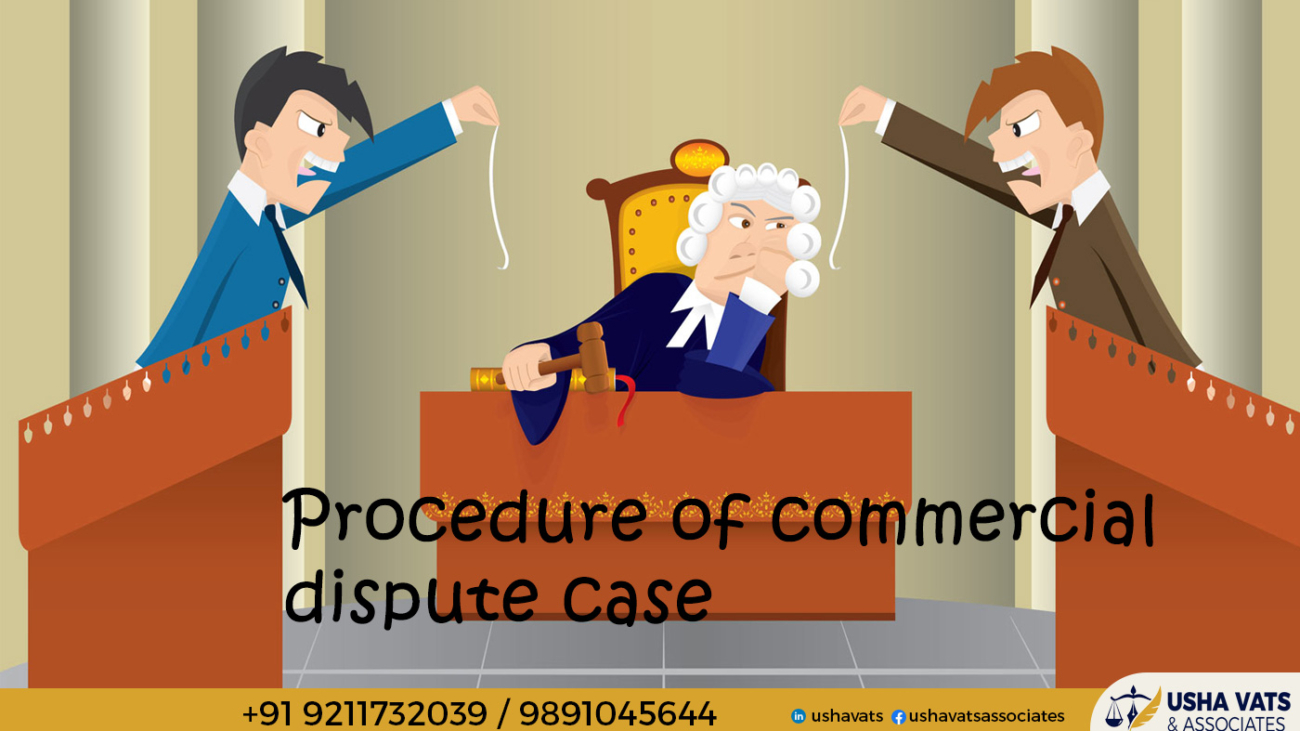
What is the procedure for resolving a commercial dispute?

The procedure for resolving a commercial dispute in India typically follows the civil litigation process, but with some key differences due to the Commercial Courts Act, 2015, which governs commercial disputes of a specified value (generally ₹3 lakhs and above). Here’s a step-by-step outline:


PROCEDURE FOR COMMERCIAL DISPUTE RESOLUTION IN INDIA:

1. Identifying the Dispute as a ‘Commercial Dispute’

Under the Commercial Courts Act, 2015, commercial disputes include:

  • Disputes related to trade, business, and commerce
  • Partnership or joint venture issues
  • Intellectual property disputes
  • Sale of goods/services
  • Construction and infrastructure contracts
  • Banking and financial services, etc.

If the value of the subject matter is ₹3,00,000 or more, it qualifies as a “commercial dispute.”


2. Pre-Institution Mediation (Compulsory in most cases)

  • Before filing a suit, the party must send a notice and try pre-institution mediation under the Commercial Courts Act (Section 12A).
  • Mediation is conducted by the State Legal Services Authority (SLSA).
  • If mediation fails within 3 months (extendable by 2 months), the plaintiff can proceed to file a suit.
  • Exception: If urgent interim relief is sought, pre-litigation mediation is not mandatory.

3. Filing of Commercial Suit

  • The commercial suit is filed in the Commercial Court (District level) or Commercial Division of the High Court, depending on pecuniary jurisdiction.
  • The plaint (legal complaint) must contain:
    • Specific details of the dispute
    • Precise valuation of the claim
    • List of documents with the Statement of Truth (affidavit under Order VI Rule 15A CPC)

4. Scrutiny and Issue of Summons

  • Court scrutinizes the plaint.
  • If found in order, summons are issued to the defendant to appear and file a written statement within 30 days (extendable to a maximum of 120 days).

5. Filing of Written Statement

  • The defendant files a written statement (WS) within the prescribed period.
  • Delay beyond 120 days will result in the defendant losing the right to file a WS.

6. Framing of Issues

  • The court frames issues (questions of law/fact that need to be decided).

7. Evidence and Trial

  • Parties submit their evidence by way of affidavits.
  • Cross-examination of witnesses follows.
  • The trial proceeds based on the evidence.

8. Final Arguments and Judgment

  • After the trial, both sides present final arguments.
  • The court delivers its judgment, ideally within 90 days from the conclusion of arguments.

9. Appeal

  • An appeal lies to the Commercial Appellate Division of the High Court within 60 days from the date of judgment.

Time-bound Procedure

  • Commercial Courts aim to dispose of cases expeditiously.
  • Strict timelines are enforced under the Commercial Courts Act to prevent delay tactics.

Key Legal Provisions Involved:

  • Commercial Courts Act, 2015 (Amended 2018)
  • Civil Procedure Code (CPC) as amended for commercial suits
  • Arbitration and Conciliation Act, 1996, if there is an arbitration clause
MACT

MACT Case Procedure (Motor Accident Claims Tribunal)

Here’s a step-by-step guide to the procedure of a MACT (Motor Accident Claims Tribunal) case in India, designed for easy understanding and reference:


⚖️ MACT Case Procedure (Motor Accident Claims Tribunal)

Under the Motor Vehicles Act, 1988 (primarily Sections 165–176), Motor Accident Claims Tribunals are empowered to adjudicate compensation claims for death, injury, or property damage due to motor vehicle accidents.


📌 1. Filing the Claim Petition

  • Filed by:
    • Injured person
    • Legal heirs of the deceased (in case of death)
    • Property owner (if damage)
  • Must be filed before the MACT having jurisdiction over the accident location or claimant’s residence.
  • Time limit: Ideally within 6 months of the accident (Section 166(3), though not strictly enforced post 1994 amendment).

📄 2. Contents of the Claim Petition

  • Name, age, and occupation of the injured/deceased
  • Date, time, and place of accident
  • Police report details (FIR, charge sheet)
  • Hospital and medical bills
  • Insurance details of the offending vehicle
  • Details of driver, owner, and insurer

📬 3. Notice to Respondents

  • Tribunal issues notice to:
    • Owner and driver of the offending vehicle
    • Insurance company
  • They must file their written statement/reply.

⚖️ 4. Framing of Issues

  • Tribunal frames points for determination, such as:
    • Was the accident due to rash and negligent driving?
    • Is the insurer liable to pay?
    • What is the quantum of compensation?

🧾 5. Evidence Stage

  • Parties present documentary and oral evidence:
    • Medical records, eyewitnesses, accident reports, income proof
  • Cross-examination of witnesses

🗣️ 6. Final Arguments

  • Both parties make oral or written submissions before the tribunal.

🧑‍⚖️ 7. Judgment and Award

  • Tribunal passes an award determining:
    • Liability
    • Amount of compensation
    • Apportionment (if multiple dependents)
  • Award is binding unless challenged.

💸 8. Compensation Disbursement

  • Usually directed to be paid by the insurance company.
  • Paid via cheque or bank transfer to claimant or legal heirs.
  • Sometimes kept in fixed deposit for minors or illiterate claimants.

🔁 9. Appeal

  • Appeal against MACT award lies to the High Court under Section 173 MV Act.
  • Must be filed within 90 days of the award.

📚 Key Legal Provisions

SectionDescription
165 MV ActJurisdiction of MACT
166 MV ActApplication for compensation
168 MV ActAward of compensation
173 MV ActAppeal provision

CHEQUE-BOUNCE-PROCDEDURE

What is the procedure of cheque bounce case u/s 138 of the Negotiable Instruments Act, 1881) step by step?

The procedure for filing and pursuing a cheque bounce case (under Section 138 of the Negotiable Instruments Act, 1881) in India involves several clear legal steps. Here’s a step-by-step guide:


Step-by-Step Procedure of a Cheque Bounce Case in India


Step 1: Presentation of the Cheque

  • The payee presents the cheque to the bank within its validity (usually 3 months from the date on the cheque).
  • If the cheque bounces due to insufficient funds, account closure, or any other reason, the bank issues a “Cheque Return Memo.”

Step 2: Issuance of Legal Demand Notice

  • The payee must send a legal notice to the drawer of the cheque within 30 days of receiving the “Cheque Return Memo.”
  • The notice must:
    • Inform about the dishonour.
    • Demand payment of the cheque amount.
    • Give the drawer 15 days to make the payment.

Step 3: Waiting Period

  • After sending the notice, the drawer is given 15 days to make the payment.
  • If the drawer pays within 15 days – case ends.
  • If the drawer fails to pay – proceed to file a complaint.

Step 4: Filing of Complaint in Court

  • A complaint must be filed under Section 138 of the Negotiable Instruments Act within 30 days of the expiry of the 15-day notice period.
  • The complaint is filed in a Magistrate’s Court having jurisdiction (usually where the bank of the payee is located).
  • Documents needed:
    • Copy of the bounced cheque.
    • Cheque return memo.
    • Copy of the legal notice sent.
    • Postal or courier receipt showing notice was delivered/sent.
    • Affidavit and complaint form.

Step 5: Cognizance and Summons by the Court

  • The Magistrate examines the complaint and supporting documents.
  • If prima facie case is made out, the court issues summons to the drawer (accused).

Step 6: Appearance of Accused

  • The accused appears in court and may:
    • Seek bail.
    • Contest the case or try to settle.
  • The court may refer the matter for mediation.

Step 7: Evidence Stage

  • The complainant presents evidence (oral or documentary).
  • The accused is given the opportunity to cross-examine.
  • The accused may present their defence evidence.

Step 8: Final Arguments & Judgment

  • Both parties present final arguments.
  • The court delivers judgment:
    • If guilty: the drawer may be punished with imprisonment up to 2 years and/or fine up to double the cheque amount.
    • If not guilty: the case is dismissed.

Step 9: Appeal (if required)

  • Either party can file an appeal in the Sessions Court within 30 days of the judgment.

civiljourney

Understanding the Journey of a Civil Case – From Filing to Final Judgment

Here’s a clear, step-by-step overview of the journey of a civil case in India — from filing to final judgment — under the Code of Civil Procedure (CPC), 1908:


🧭 Journey of a Civil Case – Step by Step

Stage No.StageDescription
1️⃣Filing of PlaintThe plaintiff files a plaint (civil complaint) before the appropriate civil court with court fees, documents, and verification.
2️⃣Issue of SummonsIf the plaint is admitted, the court issues summons to the defendant under Order V CPC to appear and file a written statement (usually within 30 days, extendable up to 90 days).
3️⃣Written StatementThe defendant files their reply and may include set-off or counterclaim (Order VIII CPC).
4️⃣Replication (Optional)Plaintiff may file a replication to the written statement to respond to new facts raised.
5️⃣Framing of IssuesUnder Order XIV CPC, the court frames issues of fact and law from the pleadings that need to be tried.
6️⃣Trial BeginsBoth parties present evidence:
  • Examination-in-Chief (by affidavit)
  • Cross-examination and Re-examination
    All governed by Order XVIII CPC. |
    | 7️⃣ | Arguments | After evidence, both sides present oral arguments and written submissions (if any). |
    | 8️⃣ | Judgment | The court delivers a reasoned judgment under Order XX CPC, either immediately or within 30 days. |
    | 9️⃣ | Decree | A formal decree (Order XX Rule 6 CPC) follows judgment, recording the final relief granted. |
    | 🔟 | Appeal / Execution | – Appeal (Order XLI CPC) can be filed in the higher court within the limitation period.
  • Or else, execution (Order XXI CPC) is filed to enforce the decree. |

🔁 Optional Intermediary Steps

  • Interim Applications: Temporary injunctions (Order XXXIX), appointment of receiver, or other reliefs.
  • Mediation/ADR: In some cases, courts refer the parties to mediation or Lok Adalat.
  • Amendment of Pleadings: Under Order VI Rule 17 CPC, with permission.
  • Dismissal for Default or Ex-Parte Hearing: If either party doesn’t appear (Order IX CPC).

🏛️ Example Timeline (Indicative):

MonthEvent
1Filing of plaint
2Summons served
3Written statement filed
4Framing of issues
6-12Evidence of parties
13Arguments
14Judgment + Decree
15Execution / Appeal

Recovery Suit

Recovery suit permanent injection vs specific performance

Here’s a clear comparison between a recovery suit, permanent injunction, and specific performance under Indian civil law (mainly under the Specific Relief Act, 1963 and CPC, 1908):


🏛️ 1. Recovery Suit

Purpose:
To recover possession of property (movable or immovable) or money from a person who has wrongfully taken or retained it.

Key Features:

  • Filed under CPC (Order XXI for execution) or Specific Relief Act (Sections 5, 6).
  • Often involves unlawful possession or breach of contract (e.g., refund cases).
  • Can be filed for recovery of money (due to loan, damages, rent, etc.) or possession of property.

Examples:

  • A landlord files a suit to recover possession from a tenant overstaying after lease expiry.
  • Recovery of money lent via a promissory note.

⚖️ 2. Permanent Injunction

Purpose:
To restrain a party permanently from doing an act that violates the rights of another.

Legal Basis:
Section 38, Specific Relief Act, 1963

Key Features:

  • Granted by court after full trial.
  • Prevents future or continued infringement of legal rights (e.g., property rights, contract terms).
  • Differs from temporary injunction (Order XXXIX CPC), which is interim relief.

Examples:

  • A neighbor is permanently restrained from encroaching on another’s land.
  • A builder is restrained from selling a disputed flat.

📜 3. Specific Performance

Purpose:
To compel a party to perform a contract according to its terms, especially when monetary compensation is inadequate.

Legal Basis:
Sections 10-14 of the Specific Relief Act, 1963

Key Features:

  • Usually invoked in real estate/property contracts, or sale of unique goods.
  • Monetary compensation not adequate remedy.
  • Discretionary relief, not granted if contract is void or performance impossible.

Examples:

  • Buyer of land sues the seller to enforce sale agreement.
  • A party sues to get a company to transfer shares as agreed.

🔍 Comparison Table

FeatureRecovery SuitPermanent InjunctionSpecific Performance
Legal BasisCPC / Specific Relief ActSection 38, Specific Relief ActSections 10–14, Specific Relief Act
Primary ReliefRecovery of possession/moneyPrevent a person from doing somethingEnforce specific terms of a contract
When UsedLoss of possession/moneyRisk of ongoing/future violationBreach of specific, enforceable contract
Type of Right ProtectedPossessory or monetaryNegative right (to stop interference)Positive right (to compel performance)
Discretionary?No (legal right)YesYes
accused-right

If the police do not properly investigate a criminal case, what can do Accused Person?

If the police do not properly investigate a criminal case, and this negatively affects the rights of an accused person, the accused can take several legal steps under Indian law to ensure a fair and proper investigation. Here’s what can be done:

1. File an Application to the Magistrate (Under Section 173(3) or 193 of the Bharatiya Nagarik Suraksha Sanhita (BNSS))

The accused can approach the Magistrate if the investigation is unfair, biased, or incomplete.

Under Section 173(3) BNSS: The Magistrate can direct police to conduct a proper investigation.

Under Section 193) BNSS: The accused can request for further investigation if new facts are discovered or if the initial investigation was flawed.

2. File a Protest Petition

If the charge sheet is already submitted and the accused feels it’s false or based on biased investigation, a protest petition can be filed before the Magistrate to point out flaws or request further probe

3. File a Petition in the High Court (Under Section 528 BNSS or Article 226 of the Constitution)

If the police are deliberately acting in a biased or negligent way, the accused can:

File a petition under Section 528 BNSS for quashing proceedings based on improper investigation.

File a writ petition under Article 226 of the Constitution seeking a direction for proper investigation or transfer to another agency like the CBI or Crime Branch.

4. Demand a Fair Trial under Article 21 of the Constitution

The right to a fair investigation is part of the right to life and personal liberty under Article 21.

If the investigation is compromised, the accused can invoke constitutional remedies and seek judicial intervention for a fair process.

5. Challenge the Chargesheet

After police file the chargesheet under Section 173(3) BNSS, the accused can:

File objections to the chargesheet if it is based on a faulty or biased investigation.

Seek discharge before the trial begins if there is insufficient or flawed evidence.

6. File Complaint Against Investigating Officer

The accused may file a complaint to higher police officials or even a vigilance complaint against the Investigating Officer (IO) for negligence or bias.

7. Seek Transfer of Investigation to Independent Agency

If there’s strong evidence of bias or collusion, courts can order transfer of investigation to:

CBI (Central Bureau of Investigation)

Special Investigation Team (SIT)

8. Raise Issues During Trial

The accused can:

Cross-examine witnesses,

Point out flaws in the investigation,

Argue for acquittal based on lack of proper evidence or illegal investigation.

cpcrule

Important order and rule in CPC

In the Code of Civil Procedure, 1908 (CPC), which governs the procedure for civil litigation in India, there are several important Orders and Rules that form the backbone of civil trials. Here’s a concise list of important Orders and Rules in CPC along with their relevance:


Important Orders in CPC

OrderTitlePurpose/Importance
Order IParties to SuitsDeals with joinder, misjoinder, and non-joinder of parties.
Order IIFrame of SuitMandates inclusion of all claims to avoid multiple suits.
Order VIssue and Service of SummonsProvides for the process of serving summons to defendants.
Order VIPleadings GenerallyGoverns how pleadings (plaint and written statement) are framed.
Order VIIPlaintLists what a plaint must contain and when it can be rejected.
Order VIIIWritten Statement, Set-off and CounterclaimProvides rules regarding the defendant’s reply and counterclaims.
Order IXAppearance of Parties and Consequences of Non-AppearanceDeals with ex parte proceedings and dismissal for default.
Order XExamination of PartiesAllows court to examine parties to clarify issues.
Order XIDiscovery and InspectionPertains to interrogatories, discovery, and document inspection.
Order XIIAdmissionsDeals with admission of facts and documents.
Order XIIIProduction, Impounding and Return of DocumentsGoverns management of documents during a suit.
Order XIVSettlement of IssuesFocuses on framing and determination of issues for trial.
Order XVDisposal of the Suit at First HearingPermits court to decide cases without full trial in clear cases.
Order XVISummoning and Attendance of WitnessesDeals with the procedure to summon witnesses.
Order XVIIIHearing of the Suit and Examination of WitnessesCovers trial procedure including examination-in-chief, cross, and re-examination.
Order XXJudgment and DecreeExplains how judgment is pronounced and decrees drawn.
Order XXIExecution of Decrees and OrdersKey order for executing civil court decisions.
Order XXIIDeath, Marriage and Insolvency of PartiesExplains substitution of parties after death etc.
Order XXIIIWithdrawal and Adjustment of SuitsDeals with withdrawal or compromise of suits.
Order XXXIXTemporary Injunctions and Interlocutory OrdersCrucial for interim reliefs during the pendency of a suit.
Order XLIAppeals from Original DecreesGoverns first appeals from trial court decisions.

📌 Notable Rules (Select Examples)

Each Order has multiple rules, but here are a few important Rules often relied upon:

  • Order VII Rule 11 – Rejection of plaint (for lack of cause of action, undervaluation, etc.).
  • Order VIII Rule 1 – Timeline for filing a written statement.
  • Order IX Rule 6 & Rule 13 – Ex parte decree and setting it aside.
  • Order XX Rule 6 & 6A – Contents and format of the decree.
  • Order XXI Rule 32 – Enforcement of decree for specific performance or injunction.
  • Order XXXIX Rules 1 & 2 – Grant of temporary injunction.

🏛️ Other Related Sections in CPC:

  • Section 9 – Jurisdiction of civil courts.
  • Section 10 – Stay of suit (res sub judice).
  • Section 11 – Res judicata.
  • Section 80 – Notice before suing the government.
Investi

If the police did not properly investigate a criminal case, what can do a common man (complainant or victim)?

If the police did not properly investigate a criminal case, a common man (complainant or victim) has several legal remedies available in India to seek justice. Here’s what can be done:

1. File a Complaint with Higher Police Authorities

  • Approach the Senior Police Officers such as the Superintendent of Police (SP), Deputy Commissioner of Police (DCP), or Commissioner of Police.
  • You can send a written complaint or meet in person and request a fair and proper investigation.

2. File an Application under Section 156(3) CrPC

  • You can approach a Judicial Magistrate and file an application under Section 156(3) of the Criminal Procedure Code (CrPC).
  • The Magistrate can direct the police to register an FIR (if not done) or to investigate the case properly.

3. File a Complaint Case under Section 200 CrPC

  • If the police do not act, you can file a private complaint directly with the Magistrate under Section 200 CrPC.
  • The Magistrate may examine the complainant and witnesses and take cognizance of the offence.

4. Approach the State or National Human Rights Commission (NHRC)

  • If there is serious negligence or violation of rights during the investigation, you can file a complaint before the State Human Rights Commission or NHRC.

5. File a Writ Petition in High Court

  • Under Article 226 of the Constitution, you can file a writ petition (Mandamus) in the High Court seeking:
    • Proper investigation
    • Transfer of investigation to another agency (like Crime Branch or CBI in extreme cases)

6. Approach the Lokayukta or Vigilance Department

  • In cases of corruption or willful negligence by police officers, complaints can be made to the Lokayukta, Vigilance Department, or Internal Complaints Cell of the Police Department.

7. File an RTI Application

  • You can file an RTI (Right to Information) application to obtain investigation status, copies of FIRs, action taken, etc., to gather evidence of police inaction.